Shop our best deals online.
Shop Now
Why Does Engineered Hardwood Need to Acclimate Before Installation
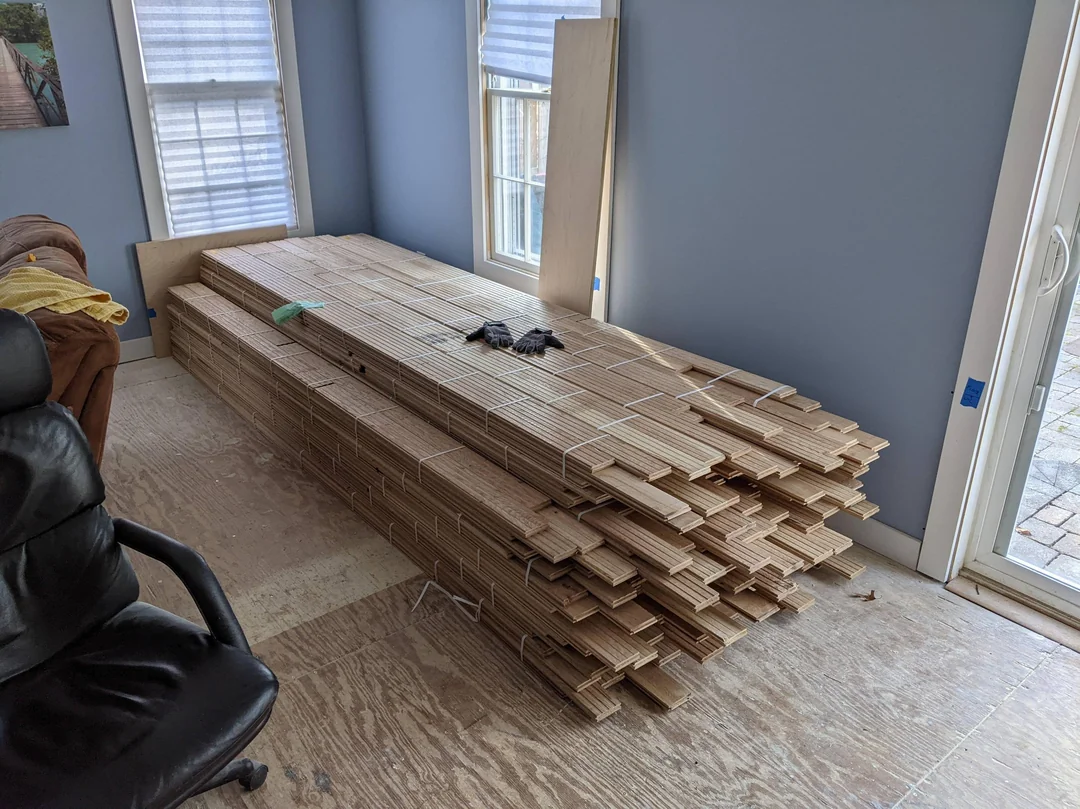
Table of Contents
- 1 What Is Acclimation and Why Is It Necessary?
- 2 The Science Behind Moisture and Wood Movement
- 3 Does Engineered Hardwood Need to Acclimate Like Solid Wood?
- 4 How Long Should Engineered Hardwood Acclimate?
- 5 Acclimation Best Practices for Engineered Hardwood
- 6 Using Moisture Testing Tools
- 7 Effects of Improper Acclimation
- 8 Acclimation Setup: How to Do It Right
- 9 The Role of Subfloors in Moisture Control
- 10 Monitoring Conditions After Installation
- 11 Common Myths About Engineered Hardwood Acclimation
- 12 Conclusion: Acclimation Is the Key to Lasting Floors
- 13 FAQs
Homeowners often ask, if engineered hardwood needs to acclimate before installation. The simple answer is yes, and it’s a critical step you shouldn’t skip.
Even though engineered hardwood flooring is designed to be more stable than solid hardwood, it still contains a real wood veneer that reacts to environmental changes in moisture content (MC) and relative humidity. Allowing the flooring to acclimate before installation helps it reach equilibrium moisture content (EMC), the balance between the wood’s internal moisture and the humidity in the surrounding environment.
Skipping this process can lead to structural issues such as cupping, crowning, or warping after installation, which can be costly to repair. Understanding the science behind floor acclimation will help you achieve a stable, long-lasting, and professional-quality flooring.
What Is Acclimation and Why Is It Necessary?
Acclimation is the process of letting engineered hardwood flooring adjust to the temperature and humidity of the room where it will be installed. Since wood is a hygroscopic material, it naturally absorbs or releases moisture depending on the environment.
When engineered hardwood arrives from the manufacturer or warehouse, it may have a different moisture content (MC) than the home where it’s being installed. By letting it sit in the space for a few days, the planks achieve equilibrium moisture content (EMC), stabilizing the material and reducing the risk of movement once installed.
Neglecting this step can lead to visible floor issues like cupping (edges rise higher than the center) or crowning (the center becomes higher than the edges). These problems occur when the moisture balance isn’t achieved before the flooring is nailed, glued, or floated.
The Science Behind Moisture and Wood Movement
To understand why acclimation is vital, you must first understand how moisture affects wood.
All types of wood, including engineered hardwood flooring, contain a specific level of moisture content (MC). When exposed to changes in humidity, wood expands as it absorbs moisture and contracts as it dries out.
This change continues until the wood reaches equilibrium moisture content (EMC), where the MC matches the relative humidity of the environment. The goal of acclimation is to let your flooring reach EMC before installation so it won’t shift after being placed.
If engineered hardwood is installed before reaching EMC, it can either swell or shrink post-installation, resulting in visible gaps, buckling, or warping.
Does Engineered Hardwood Need to Acclimate Like Solid Wood?
Many assume that because engineered hardwood flooring is made with multiple layers of plywood or high-density fiberboard (HDF), it doesn’t require acclimation. While it’s true that engineered floors are more dimensionally stable than solid hardwood, they still contain a real wood veneer that reacts to environmental factors.
The species of wood, the subfloor type (whether concrete subfloor or wood subfloor), and the climate conditions all play a role in determining the amount of acclimation time required.
For instance, a walnut or maple veneer may react differently to humidity than oak, which is known for its moderate stability. Similarly, homes with higher relative humidity (above 55%) or lower humidity (below 30%) will require longer acclimation periods to prevent future problems.
You can further explore How to choose between Engineered hardwood and solid hardwood for your home here.
How Long Should Engineered Hardwood Acclimate?
On average, engineered hardwood flooring should acclimate for 48 to 72 hours before installation. However, this duration can vary depending on climate conditions, species of wood, and subfloor type.
- In humid climates, allow up to 5–7 days for acclimation.
- In dry climates, 2–3 days is typically sufficient.
- When installing over a concrete subfloor, ensure both the slab and flooring reach equilibrium moisture content (EMC) before proceeding.
Always consult the manufacturer’s guidelines since some engineered floors come pre-treated or moisture-stabilized, which may affect acclimation requirements.
Acclimation Best Practices for Engineered Hardwood
Proper acclimation isn’t just about letting boxes sit in a room, it requires following a few specific best practices:
a. Maintain Ideal Climate Conditions:
Keep the room’s temperature requirements between 60°F–80°F and relative humidity between 35%–55% during acclimation and installation.
b. Unbox the Flooring:
Remove the planks from their packaging to allow air circulation. Stack them in a cross-hatch pattern with airflow spacers between each layer to ensure even exposure to the room’s environment.
c. Use HVAC Systems:
Keep the HVAC system running to maintain consistent climate conditions. This ensures the flooring adjusts to the same temperature and humidity it will experience year-round.
d. Avoid Direct Sunlight or Damp Areas:
Store the flooring in a dry, shaded area away from windows or moisture sources. Avoid areas near bathrooms, laundry rooms, or newly poured concrete.
Using Moisture Testing Tools
Before and after acclimation, it’s critical to measure the moisture content (MC) of both the flooring and the subfloor to ensure compatibility.
A pinless moisture meter or wood moisture meter (like the Orion line) is ideal for this purpose. These devices provide accurate, non-destructive readings of the flooring’s internal moisture levels.
Follow these steps:
- Use a pinless meter to take readings across several planks to get an average MC value.
- Measure the subfloor moisture, for a concrete subfloor, use a calcium chloride test or relative humidity probe.
- Compare the readings. The difference between the subfloor and engineered hardwood should not exceed 2%–4% for wood subfloors and 3%–5% for concrete subfloors.
If the difference is greater, allow more acclimation time or adjust environmental conditions until the flooring reaches balance.
Effects of Improper Acclimation
Skipping or rushing acclimation can lead to several post-installation problems that compromise both appearance and durability:
- Cupping: The edges of the planks rise higher than the center due to excess moisture absorption.
- Crowning: The center of the planks bulges upward because of uneven drying.
- Warping: Planks twist or bend when moisture is trapped unevenly.
- Gapping: Shrinkage during dry conditions causes visible gaps between planks.
These issues are not only unsightly but can also weaken the structural integrity of the flooring. Repairing them often requires resurfacing or full replacement, costly outcomes that proper acclimation can easily prevent.
Acclimation Setup: How to Do It Right
Creating the right acclimation setup is essential to achieving even and effective moisture adjustment. Here’s a simple process:
- Choose the Right Space: Use the actual room where the installation will occur. Avoid garages or basements unless those are the intended installation areas.
- Stabilize Climate Conditions: Run the HVAC system continuously for at least a week prior to acclimation to ensure stable temperature and relative humidity.
- Lay Out the Flooring: Open the boxes and spread the engineered wood planks evenly across the floor, stacking them with airflow spacers between layers.
- Check Regularly: Use a wood moisture meter to check the moisture content daily.
- Confirm Readiness: Once the engineered hardwood and subfloor have similar moisture readings, the flooring is ready for installation.
This process ensures your floors remain dimensionally stable and visually flawless for years to come.
The Role of Subfloors in Moisture Control
The type of subfloor beneath your engineered hardwood plays a significant role in how long acclimation takes and how the flooring performs.
- Concrete Subfloors: These tend to retain moisture. Always use a vapor barrier or moisture barrier to protect your engineered flooring from moisture damage.
- Wood Subfloors: Typically more breathable but still need to be dry, level, and clean. Conduct a moisture test to ensure the readings fall within acceptable limits.
Both subfloor types require careful moisture measurement before installation to prevent cupping and warping down the line.
Monitoring Conditions After Installation
Even after installation, it’s essential to maintain the same temperature and humidity levels that were established during acclimation. Use a hygrometer to monitor relative humidity, especially during seasonal changes.
Running your HVAC system consistently helps prevent drastic shifts in humidity. During winter, when air tends to be dry, consider using a humidifier to maintain a stable indoor climate. Similarly, dehumidifiers can help during humid summer months.
Common Myths About Engineered Hardwood Acclimation
Let’s debunk a few misconceptions that often mislead homeowners:
- Myth 1: Engineered hardwood doesn’t need acclimation because it’s factory-sealed.
- Fact: Even sealed planks have a natural wood veneer that reacts to humidity changes.
- Fact: Even sealed planks have a natural wood veneer that reacts to humidity changes.
- Myth 2: Acclimation only applies to solid hardwood.
- Fact: While solid hardwood is more susceptible to movement, engineered wood still benefits greatly from acclimation.
- Fact: While solid hardwood is more susceptible to movement, engineered wood still benefits greatly from acclimation.
- Myth 3: Leaving boxes unopened during acclimation works just as well.
- Fact: Airflow is essential. Keep boxes open and planks spaced with airflow spacers for even acclimation.
Conclusion: Acclimation Is the Key to Lasting Floors
So, does engineered hardwood need to acclimate? Absolutely. Allowing your flooring to reach its equilibrium moisture content (EMC) before installation is the best way to avoid cupping, crowning, and warping and to ensure a perfect, long-lasting finish.
Take the time to acclimate your engineered hardwood flooring correctly, and you’ll be rewarded with a beautiful, stable surface that enhances your home for decades.
Visit Flooring Outlet & More today to explore premium engineered hardwood options, get professional installation advice, and create a space that stands the test of time.
FAQs
1. How long does engineered hardwood need to acclimate?
Engineered hardwood generally needs 48 to 72 hours to acclimate before installation. However, depending on climate conditions, species of wood, and subfloor type, it may take up to five days to reach proper equilibrium moisture content (EMC) and avoid warping.
2. Does engineered hardwood need to acclimate in winter?
Yes. During winter, homes often have lower relative humidity due to indoor heating. Allow your engineered hardwood flooring to acclimate longer, about four to six days, to balance moisture content (MC) levels and prevent shrinkage or gapping once the HVAC system stabilizes temperatures.
3. How to acclimate engineered wood flooring?
Remove planks from packaging and spread them out in the installation room. Use airflow spacers for circulation and maintain temperature requirements between 60–80°F with relative humidity of 35–55%. Allow the flooring to rest until moisture readings stabilize.
4. Can hardwood flooring acclimate in the box?
No. Keeping flooring sealed in boxes restricts airflow, preventing proper moisture exchange. For effective acclimation, open the packaging and separate planks using spacers to allow even air circulation and balance moisture content (MC) with room conditions.


