Shop our best deals online.
Shop Now
How to Pick the Best Floors for Your Home Office That Looks Professional
Table of Contents
- 1 What Makes Home Office Flooring Different From Other Rooms
- 2 Home Office Flooring Options at a Glance
- 3 Engineered Hardwood for the Home Office
- 4 Luxury Vinyl Plank for the Home Office
- 5 Laminate Flooring for the Home Office
- 6 Carpet for the Home Office
- 7 Tile for the Home Office
- 8 How to Choose the Right Office Flooring for Your Situation
- 9 Protecting Your Home Office Floor From Chair Wear
- 10 Your Office Deserves a Floor That Works as Hard as You Do
- 11 Frequently Asked Questions
- 11.1 Q: What is the best flooring for a home office with an office chair?
- 11.2 Q: Is engineered hardwood or LVP better for a home office?
- 11.3 Q: Does home office flooring affect sound quality on video calls?
- 11.4 Q: How do I protect hardwood office flooring from chair scratches?
- 11.5 Q: Is carpet a professional flooring option for a home office?
Choosing the best floors for your home office matters more than most people realize when setting up a dedicated workspace at home. The floor is the first thing clients notice on video calls, the surface your chair rolls across hundreds of times a day, and the element that ties together the professional feel of the room. The wrong home office flooring creates noise, looks worn quickly, or makes the space feel more like a spare room than a real working environment. This guide covers every major office flooring option, what each one offers for a home office setting, and how to match the right choice to your specific needs.
What Makes Home Office Flooring Different From Other Rooms
The Demands Are Unique
A home office places different demands on flooring than a living room or bedroom. Chair casters roll repeatedly across the same paths, creating concentrated abrasion in specific spots. Video calls make the floor’s appearance a professional consideration, not just a personal one. Long hours at a desk mean comfort underfoot matters even when you are seated. And the room often needs to feel polished and intentional rather than casual.
Factors to Prioritize
Before comparing materials, consider which of these factors matters most to your specific workspace situation.
Chair compatibility is often the most overlooked factor. Hard casters on an office chair can scratch wood-based floors quickly. Soft rubber casters are safe on most hard surfaces but may leave marks on very light-colored vinyl over time. A chair mat addresses this regardless of the floor type chosen.
Sound management is important if you take calls, record content, or share walls with others in the home. Hard surfaces reflect sound while softer materials absorb it.
Appearance and professionalism matter if your floor is visible during video meetings. A floor that looks polished, clean, and intentional reads as professional on camera.
Comfort during long hours affects productivity. Standing at a standing desk or walking between a desk and a printer or bookshelf is more comfortable on surfaces with some give than on very hard cold tile.
Home Office Flooring Options at a Glance
| Flooring Type | Professional Appearance | Comfort | Maintenance | Avg. Lifespan |
| Engineered Hardwood | Excellent | Warm | Moderate | 20 to 30 years |
| Luxury Vinyl Plank | Very Good | Comfortable | Low | 15 to 25 years |
| Laminate | Good | Firm | Low | 15 to 25 years |
| Carpet | Moderate | Very Soft | High | 8 to 15 years |
| Tile | Good | Hard | Very Low | 50+ years |
Engineered Hardwood for the Home Office
Why It Works Well
Engineered hardwood flooring is one of the strongest choices for a home office that needs to look genuinely professional. Its real wood veneer surface delivers the warmth, grain character, and visual quality that signals a well-designed, serious workspace. On video calls, the appearance of real wood flooring reads as premium and intentional in a way that most other office flooring ideas do not.
Performance Considerations
Chair Compatibility
Hard plastic casters should not roll directly on engineered hardwood without a chair mat. Repeated rolling pressure from hard casters concentrates wear in specific paths and creates visible scratches over months of daily use. A high-quality chair mat on top of the hardwood eliminates this issue entirely while preserving the floor’s appearance.
Noise and Acoustics
Engineered hardwood reflects sound more than carpet or cork. For home offices used for regular calls or recordings, an area rug behind the desk or across the main floor area absorbs enough sound to noticeably improve audio quality without covering the full floor.
Maintenance
Sweep regularly and use a damp microfiber mop with a hardwood-safe cleaner for deeper cleaning. Maintain indoor humidity between 35% and 55% year-round. Engineered hardwood is not waterproof so coffee or drink spills should be wiped immediately.
For species selection and product guidance, read How to Select Engineered Hardwood Flooring That Actually Fits Your Home.
Best For
Home offices where professional appearance is the top priority, rooms visible during regular video calls, and homeowners who want a long-term flooring investment that adds to the property’s value.
Luxury Vinyl Plank for the Home Office
Why It Works Well
Luxury vinyl plank flooring is one of the most practical professional flooring choices for a home office. Modern LVP in realistic wood or stone finishes looks polished and purposeful on camera and in person. Its waterproof core means beverage spills at the desk are easily cleaned without any concern about permanent damage.
Performance Considerations
Chair Compatibility
LVP handles office chair casters better than hardwood in most cases. Rubber casters roll smoothly without leaving marks or causing abrasion to the wear layer. Hard plastic casters can still leave micro-scratches over time, so a chair mat remains a good precaution for long-term appearance.
Comfort and Sound
Rigid core SPC and WPC formats feel solid and comfortable underfoot. WPC products with a foamed core layer provide noticeably more cushioning than SPC, which is a meaningful difference during long work days with standing desk use. LVP reflects sound similarly to hardwood, so an area rug helps manage acoustics if calls and recordings are a regular part of the workday.
Maintenance
LVP is the easiest professional flooring surface to maintain. Sweep and damp mop as needed. No humidity control requirements. No refinishing. Spills are a non-issue.
For product comparisons see Why Choose Luxury Vinyl Plank for Your Home Renovation.
Best For
Home offices where low maintenance and durability are priorities, rooms where spills or humidity are a concern, and homeowners who want a professional look without the care requirements of real wood.
Laminate Flooring for the Home Office
Why It Works Well
Laminate flooring offers a realistic wood appearance at a lower price than engineered hardwood or premium LVP. For home offices where budget is a consideration and the room is dry and climate-stable, laminate delivers a clean and professional-looking surface that handles daily office use well.
Performance Considerations
Chair Compatibility
A chair mat is strongly recommended on laminate. Hard casters concentrate wear on the same surface paths and laminate’s HDF core does not recover from this type of repeated pressure the way harder surfaces do. With a mat in place, laminate holds up well throughout the working day.
Moisture Limitation
Laminate is not waterproof. Regular office use rarely involves significant moisture exposure, but a spilled mug left unwiped can cause the HDF core to swell at the seam. Prompt cleanup is important. For home offices with a coffee or water setup, keeping a waterproof mat under that area provides added protection.
Sound
Laminate reflects sound similarly to other hard surfaces. A rug or acoustic panel treatment helps if the room is used for calls.
For long-term care guidance, see What Is the Lifespan of Laminate Flooring and How Can You Extend It.
Best For
Budget-conscious home office setups, dry and stable rooms, and homeowners who want the wood aesthetic without the higher cost of engineered hardwood or premium LVP.
Carpet for the Home Office
Why Some Homeowners Choose It
Carpet is the most comfortable surface underfoot and the best natural sound absorber of any option on this list. For home offices where acoustic control is critical, such as podcast studios, therapy practices, or music production spaces, carpet absorbs sound in a way that no hard surface can replicate without additional treatment.
Performance Considerations
Chair Compatibility
Standard office chair casters on carpet create two problems. They wear down the carpet pile along the rolling path and they require noticeably more effort to roll across, which causes fatigue in the arm and shoulder over long work days. A hard chair mat designed for carpet resolves both issues.
Appearance
From a professional flooring standpoint, carpet is the least polished option for a home office visible on video calls. It can look dated and casual depending on the pile type and color. Tight loop or commercial-grade carpet tiles offer a cleaner and more modern appearance than residential plush carpet in an office setting.
Maintenance
Carpet requires the most maintenance of any option and is the most difficult to clean if drinks or ink are spilled. It also holds allergens and pet dander more than hard surfaces.
Best For
Home recording studios, therapy offices, and workspaces where sound absorption is the primary concern over appearance or chair ease.
Tile for the Home Office
Why It Works in Certain Contexts
Large-format porcelain tile offers exceptional durability and requires almost no maintenance beyond regular sweeping and damp mopping. For home offices in warm climates, rooms connected to outdoor spaces, or contemporary-style homes where a clean minimal aesthetic is the design goal, tile is a strong option.
Performance Considerations
Comfort
Tile is the hardest and coldest surface on this list. Without underfloor heating or a thick area rug, a tile home office can feel uncomfortable during long working hours, especially in cooler months. This is its most significant drawback for daily workspace use.
Chair Compatibility
Tile handles office chair casters very well. Both hard plastic and rubber casters roll smoothly without damage to the surface. Grout lines can occasionally catch small caster wheels, which most homeowners address by choosing large-format tile with minimal grout joint width.
Sound
Like all hard surfaces, tile reflects sound. An area rug is especially useful in a tiled home office used for calls, both for acoustic improvement and for comfort underfoot at the desk.
Best For
Warm-climate home offices, modern or minimalist design aesthetics, and homeowners who want zero long-term maintenance after installation.
How to Choose the Right Office Flooring for Your Situation
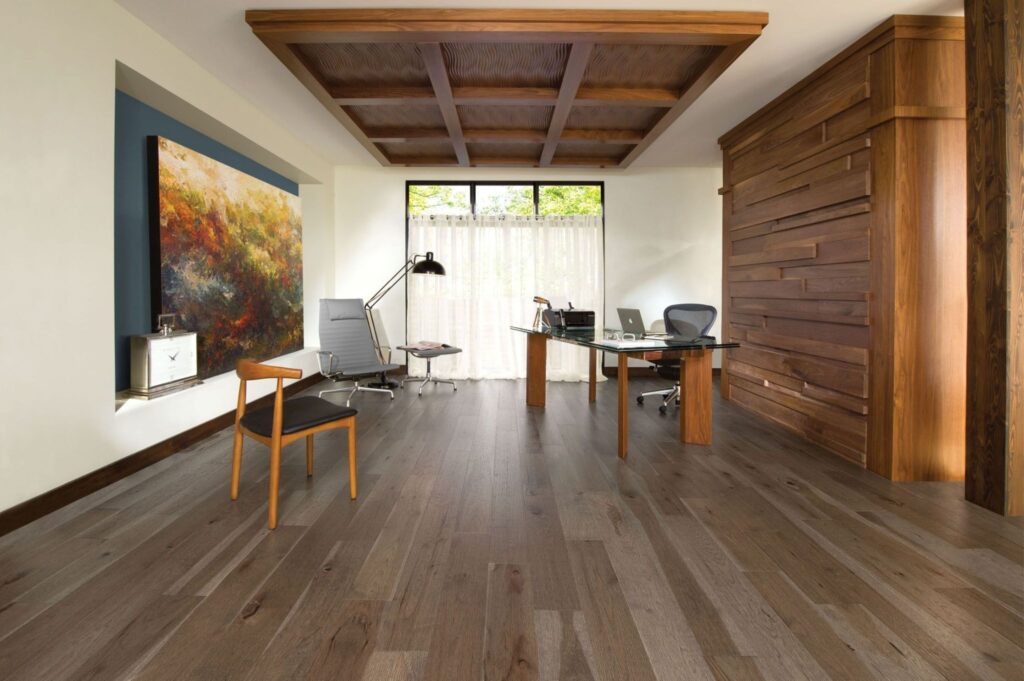
The clearest way to narrow down your options is to match the floor’s strengths to your workspace’s actual conditions and priorities.
If professional appearance on camera is your top priority, engineered hardwood gives the most authentic and premium look. If low maintenance and spill resistance matter most, LVP is the most practical answer. If budget is the primary driver and the room is dry and stable, laminate delivers solid results. If sound absorption is the defining need, carpet or a hard surface with heavy rug coverage is the right direction. If maximum durability with zero maintenance is the goal, tile is unmatched.
For most home offices that balance aesthetics, practicality, and budget, engineered hardwood or luxury vinyl plank are the two options that consistently deliver professional results with manageable upkeep.
Protecting Your Home Office Floor From Chair Wear
Regardless of which office flooring ideas you pursue, protecting the floor from chair caster damage is the most important ongoing step. Hard casters without a mat cause more premature wear on home office floors than any other single factor.
Use a high-quality polycarbonate or tempered glass chair mat sized to cover the full rolling area of your chair. Replace it when it shows visible wear or cracking. If you prefer not to use a mat, switch your chair to soft rubber casters, which are widely available as aftermarket replacements and compatible with most office chairs.
Place doormats at the room entry to reduce grit tracked in from other areas of the home. Clean the floor regularly since accumulated grit under a rolling chair is an abrasive that degrades any surface over time.
For a full protective care routine, see Why Regular Flooring Maintenance Is Key to Avoiding Expensive Repairs.
Your Office Deserves a Floor That Works as Hard as You Do
The best floors for your home office are the ones that match how you actually work, how the space looks on camera, and how much time you want to spend on maintenance. Engineered hardwood and luxury vinyl plank cover the widest range of home office needs with the most consistent results. Both deliver professional flooring appearances, handle daily chair and foot traffic well, and stay attractive with straightforward care routines.
Visit Flooring Outlet & More to explore our full selection of engineered hardwood, luxury vinyl flooring, laminate, and carpet options to find the right fit for your home office.
Frequently Asked Questions
Q: What is the best flooring for a home office with an office chair?
A: Luxury vinyl plank handles office chair casters the best without a mat. Engineered hardwood and laminate work well with a quality chair mat in place. Soft rubber casters reduce wear on any hard surface. Carpet is the least compatible surface for standard hard plastic casters.
Q: Is engineered hardwood or LVP better for a home office?
A: Both are strong choices. Engineered hardwood looks more premium and adds property value but requires more care and humidity management. LVP is more durable, waterproof, and lower maintenance. Choose engineered hardwood for appearance priority and LVP for practical ease.
Q: Does home office flooring affect sound quality on video calls?
A: Yes. Hard surfaces like hardwood, LVP, laminate, and tile reflect sound and can create echo on calls. An area rug or acoustic panels significantly reduce this. Carpet absorbs the most sound naturally but has other practical trade-offs for workspace use.
Q: How do I protect hardwood office flooring from chair scratches?
A: Use a polycarbonate or tempered glass chair mat sized to cover the full rolling area. Alternatively, replace hard plastic casters with soft rubber ones. Sweep regularly to remove grit that gets caught under casters and acts as an abrasive on the floor surface.
Q: Is carpet a professional flooring option for a home office?
A: Carpet can look professional when commercial-grade or tight loop styles are used rather than residential plush. It offers the best natural sound absorption of any option. However, it is the most demanding to maintain and the least practical surface for standard office chair casters in daily use.
About The Author