Shop our best deals online.
Shop Now
How to Fix Gaps in Engineered Hardwood Floor When the Season Changes

Table of Contents
- 1 Why Gaps Form in Engineered Hardwood Floors
- 2 The Difference Between Normal Seasonal Gaps and Problem Gaps
- 3 Step 1: Measure and Monitor the Gaps First
- 4 Step 2: Address the Humidity Before Addressing the Gaps
- 5 Step 3: Check the Perimeter Expansion Gap
- 6 How to Fill in Gaps in Hardwood Floor Safely
- 7 When Gaps Indicate the Floor Needs Professional Attention
- 8 Preventing Seasonal Gaps From Forming
- 9 Final Thoughts
- 10 Frequently Asked Questions
- 10.1 Q: Are hardwood floor gaps in winter normal and do they go away on their own?
- 10.2 Q: What is the best product to fill in gaps in hardwood floor that appear seasonally?
- 10.3 Q: Can I fix gaps in engineered hardwood floor without removing the planks?
- 10.4 Q: Why are the hardwood floor gaps worse in some rooms than others?
- 10.5 Q: Should I fill in gaps in hardwood floor before selling my home?
Learning how to fix gaps in engineered hardwood floors during seasonal transitions is something every hardwood floor owner benefits from understanding. If you walk across your engineered hardwood in January and notice small spaces between planks that were not there in September, you are experiencing one of the most common and natural behaviors of wood flooring. Hardwood floor gaps in winter are not necessarily a sign that something went wrong with your floor. They are often the result of wood responding naturally to drier indoor air. However, knowing when gaps are normal and when they signal a problem that needs attention, and how to address them in either case, protects your floor and keeps it looking its best year-round.
Why Gaps Form in Engineered Hardwood Floors
Even though engineered hardwood is more dimensionally stable than solid wood, it still contains a real wood veneer on its surface and natural wood throughout its layered core. Wood is hygroscopic, meaning it naturally absorbs and releases moisture in response to changes in the surrounding air. When humidity drops, wood releases moisture and contracts. When humidity rises, wood absorbs moisture and expands.
This movement is measured across the width of a plank rather than its length. As the wood contracts in dry conditions, each plank gets fractionally narrower. When that narrowing is multiplied across dozens or hundreds of planks laid side by side, the cumulative result is visible hardwood floor gaps that appear at the seams between boards.
In most homes, this happens in the winter months when heating systems run continuously and strip moisture from the indoor air. Hardwood floor gaps in winter are often the most dramatic expression of this cycle. The same floor that sat perfectly tight through a humid summer develops small gaps that may concern a homeowner who does not know what is causing them.
The Difference Between Normal Seasonal Gaps and Problem Gaps
Not all hardwood floor gaps require action. Understanding which gaps are within the normal range of wood movement and which indicate a genuine installation or structural problem is the first decision to make.
Normal Seasonal Gaps
Gaps that are very small, typically less than the thickness of a dime, and that close back up on their own when humidity levels rise in spring and summer are considered normal seasonal movement. These gaps open in dry conditions and disappear in humid conditions as part of the natural wood cycle. They do not require filling and in fact should not be filled with a rigid product because the floor needs to expand back into that space when humidity rises.
These gaps are especially common in wider-plank engineered hardwood because the same percentage of contraction produces a more visible gap in a 6-inch wide plank than in a 3-inch wide one.
Gaps That Signal a Problem
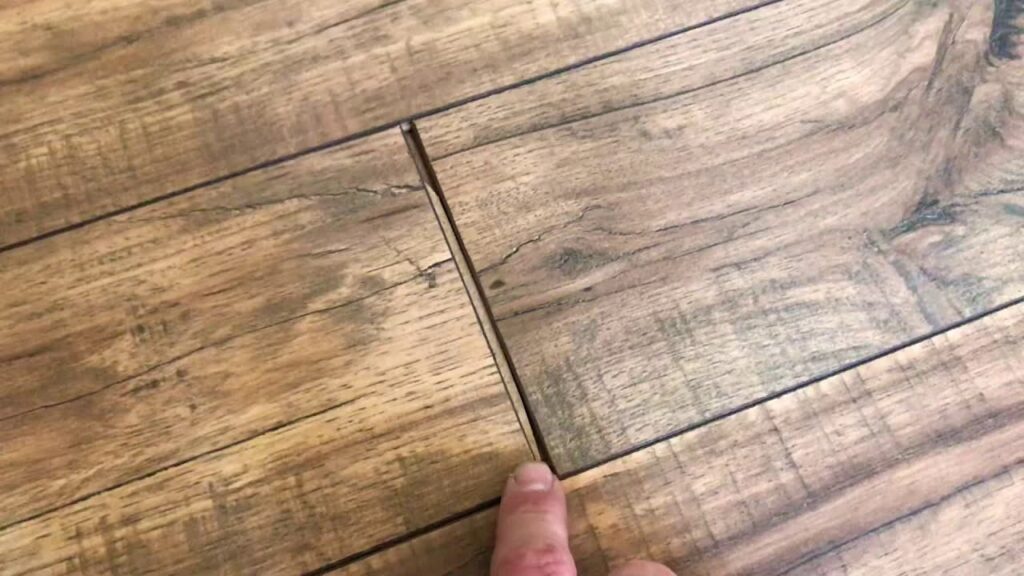
Gaps that are wide enough to catch debris, that do not close when humidity rises in warmer months, that are growing progressively wider over multiple seasons, or that are accompanied by raised plank edges, squeaking, or visible plank movement indicate a problem beyond normal seasonal behavior.
These larger or persistent hardwood floor gaps can result from inadequate expansion gaps that were left during installation, blocked perimeter gaps that prevent the floor from moving correctly, insufficient acclimation before installation, ongoing moisture loss from chronic low humidity, or in some cases subfloor issues that are causing structural movement.
Identifying which category your gaps fall into determines how you respond to them.
Step 1: Measure and Monitor the Gaps First
Before attempting to fill in gaps in the hardwood floor or making any repairs, take time to assess the gaps carefully.
Use a business card or a coin to gauge the width of the gaps. Note whether the gaps are consistent across the room or concentrated in certain areas. Take a photo of the floor now and compare it in three months when the season changes. If the gaps close significantly or completely when humidity rises, they are seasonal and do not require permanent filling.
Check the gaps at the perimeter of the room where the floor meets the baseboard. If those gaps are very tight or completely closed while gaps appear in the field of the floor, this is often a sign that the expansion gap was inadequate during installation. The floor has expanded into the perimeter gap leaving insufficient room for normal expansion and the field gaps are a consequence of the floor being stressed.
For guidance on acclimation and its role in preventing movement-related gaps from developing in the first place, read Why Does Engineered Hardwood Need to Acclimate.
Step 2: Address the Humidity Before Addressing the Gaps
The most effective way to reduce or eliminate hardwood floor gaps in winter is to raise and stabilize indoor humidity rather than filling the gaps with a product. This addresses the root cause rather than the symptom.
The recommended indoor humidity range for engineered hardwood floors is 35% to 55%. During winter when forced air heating is running, indoor humidity can drop below 30% in many homes. At that level, even well-installed floors develop noticeable gaps.
Purchase a hygrometer to measure the actual humidity level in the rooms where your floor is installed. If humidity is consistently below 35% in winter, run a whole-home humidifier connected to your HVAC system or place portable humidifiers in the affected rooms. Raise the humidity gradually rather than all at once and monitor your floor over the following weeks. In many cases, properly humidified winter air causes the gaps to narrow significantly or close completely without any physical intervention.
For a season-by-season breakdown of how to manage indoor conditions for floor health read How to Maintain Your Floors in Different Seasons.
Step 3: Check the Perimeter Expansion Gap
If gaps persist even after humidity is improved, the next step is to inspect the perimeter expansion gap around the floor.
Remove the baseboard or quarter-round molding along the walls and look at the gap between the edge of the flooring and the wall. Engineered hardwood installations require an expansion gap of at least 1/4 inch around the entire perimeter. If the flooring is pushed tightly against the wall with no gap, the floor has no room to expand and the internal stress that results shows up as gaps in the field of the floor.
If the perimeter gap is blocked or insufficient, the solution is to create more space by trimming the edge of the flooring planks along the affected walls. This can be done with a circular saw or oscillating tool equipped with a blade that cuts flush to the wall. Once the perimeter gap is restored, the floor can move freely and field gaps often diminish on their own as the floor redistributes.
Reinstall the baseboard after creating the perimeter gap, making sure to nail it to the wall only and not through the floor, so the flooring retains its freedom to move beneath the trim.
How to Fill in Gaps in Hardwood Floor Safely
For gaps that are genuinely too wide to ignore but have been confirmed as stable and not purely seasonal, filling is an appropriate option. The key is choosing the right filler material for the type of gap you are dealing with.
Flexible Wood Filler or Caulk
For gaps that show some seasonal movement but are too large to leave unfilled, a flexible wood filler or color-matched wood caulk is the appropriate product. Unlike rigid fillers, flexible products can compress and expand slightly as the floor moves with the seasons. They maintain their appearance without cracking or separating when the wood contracts further in the next dry season.
Apply the flexible filler into the gap using a putty knife or the product’s applicator tip. Overfill slightly then draw a putty knife smoothly across the gap to level the filler flush with the floor surface. Wipe away any excess immediately with a damp cloth before it dries. Choose a product that matches your floor color as closely as possible by testing in a hidden area first.
Rigid Wood Filler or Putty
Rigid wood filler is appropriate only for gaps that are confirmed to be permanent and not subject to seasonal movement. Using a rigid filler in a gap that still moves seasonally will result in the filler cracking and falling out of the gap as the wood contracts beyond the filler’s flexibility range. It also creates a hard stop against the wood expanding back into that space, which can stress the locking joints.
Apply rigid filler the same way as flexible filler. Allow it to dry fully, sand lightly if needed to level it, and touch up with a stain marker if the color needs to be blended more precisely.
Rope or Cork Gap Filler
For very wide gaps that result from severe seasonal movement or structural issues, rope-style or cork gap fillers pressed into the seam provide a flexible fill that compresses readily as the wood expands. This approach is less common in residential installations but useful when gaps are too wide for paste fillers to bridge effectively without cracking.
Color-Matched Stain Markers
For very small gaps that are mostly cosmetic, a color-matched touch-up marker in the same shade as your floor can reduce the visual contrast of the gap without actually filling it. This is the most conservative approach and appropriate when the gap is truly narrow and stable.
For a broader look at gap repair methods and the tools used to close plank separations mechanically see How to Fix Gaps in Laminate Flooring Before They Get Worse as many of the same gap-closing techniques apply to engineered hardwood floating floors.
When Gaps Indicate the Floor Needs Professional Attention
Some gap situations are beyond straightforward DIY repair and warrant professional assessment.
If wide gaps are accompanied by visible plank cupping, warping, or raised edges, this suggests moisture damage or structural movement rather than simple seasonal contraction. Attempting to fill gaps when the underlying cause is structural movement or moisture damage usually produces temporary results because the floor continues to move and the filler fails.
If gaps are concentrated in specific areas rather than distributed evenly across the floor, there may be a localized subfloor problem such as a low spot, a moisture source, or inadequate fastening of the subfloor to the structure beneath. A flooring professional can assess the subfloor condition and determine whether targeted repairs at that level are needed before the surface floor gaps can be properly addressed.
If the floor shows hardwood floor gaps in winter that are progressively widening each year rather than returning to a stable seasonal pattern, the floor may be experiencing chronic moisture loss that is causing cumulative shrinkage beyond the normal range. A professional moisture assessment of the home’s HVAC system, vapor barriers, and crawl space or basement conditions can identify the source.
For guidance on when floor problems reach the point of requiring replacement read When Should You Replace Your Floors.
Preventing Seasonal Gaps From Forming
The most effective long-term approach to managing engineered hardwood floor gaps is prevention through consistent humidity control and good installation practices.
Keep indoor humidity between 35% and 55% throughout the year. In winter this means running humidification. In summer in humid climates this means running air conditioning or dehumidification. Consistent humidity produces consistent plank dimensions and minimizes the seasonal gap cycle significantly.
During installation, allow adequate acclimation time so the planks reach equilibrium moisture content before they are locked together. A floor installed in summer that has not acclimated to winter indoor conditions will develop larger gaps in its first dry season than a floor that was installed under stable, controlled conditions.
Always maintain the full recommended perimeter expansion gap and never nail baseboards through the floor surface. A free-floating floor that can move as a unit handles seasonal changes with far less stress on individual joint connections than one that is restricted at its perimeter.
For comprehensive care practices that protect your floor throughout the year see The Ultimate Flooring Maintenance Checklist.
Final Thoughts
Knowing how to fix gaps in engineered hardwood floor starts with understanding whether the gaps you are seeing are seasonal, structural, or the result of a specific installation issue. In most cases, hardwood floor gaps in winter are a natural and manageable result of wood’s response to dry indoor air. Improving humidity control, checking perimeter expansion gaps, and using the right flexible filler for gaps that cannot be closed mechanically will address the vast majority of seasonal gap situations without requiring professional intervention.
Visit Flooring Outlet & More to explore our full range of engineered hardwood flooring options and the installation materials needed to install and maintain your floor correctly from day one.
Frequently Asked Questions
Q: Are hardwood floor gaps in winter normal and do they go away on their own?
A: Small hardwood floor gaps in winter are normal for most wood floors and typically close on their own when humidity rises in spring and summer. Gaps narrower than the thickness of a dime that disappear with seasonal humidity changes do not need to be filled. Running a humidifier to keep indoor humidity between 35% and 55% in winter significantly reduces the size of seasonal gaps.
Q: What is the best product to fill in gaps in hardwood floor that appear seasonally?
A: For gaps that still show seasonal movement, a flexible wood caulk or flexible wood filler in a matching color is the best product. Flexible fillers compress and expand with the wood rather than cracking when the floor contracts further. Rigid fillers should be reserved for permanent gaps that are confirmed to be stable across all seasons without further movement.
Q: Can I fix gaps in engineered hardwood floor without removing the planks?
A: Yes. Most gap repairs can be completed without removing any flooring. Flexible filler applied from above addresses cosmetic and stable gaps. Checking and clearing the perimeter expansion gap by removing baseboards often allows a restricted floor to redistribute and gaps to close on their own. A floor gap fixer tool can mechanically close small separations in floating floors without disassembly.
Q: Why are the hardwood floor gaps worse in some rooms than others?
A: Gaps are typically worse in rooms with lower humidity, poorer HVAC coverage, or more direct exposure to exterior cold such as rooms over unheated garages or basements. Wider plank floors also show more visible gaps for the same percentage of contraction. Rooms with better humidity control and stable temperatures consistently show smaller seasonal gaps than poorly conditioned spaces.
Q: Should I fill in gaps in hardwood floor before selling my home?
A: Small seasonal gaps that are within the normal range typically do not need to be filled before a sale and experienced home buyers and inspectors understand normal wood movement. Larger persistent gaps that collect debris or indicate a structural or moisture problem should be addressed before listing. Using a flexible filler matched to the floor color on noticeable gaps improves the visual presentation without creating a rigid block against seasonal wood movement.
About The Author