Shop our best deals online.
Shop Now
How Pet Friendly Flooring Holds Up to Scratches and Everyday Accidents
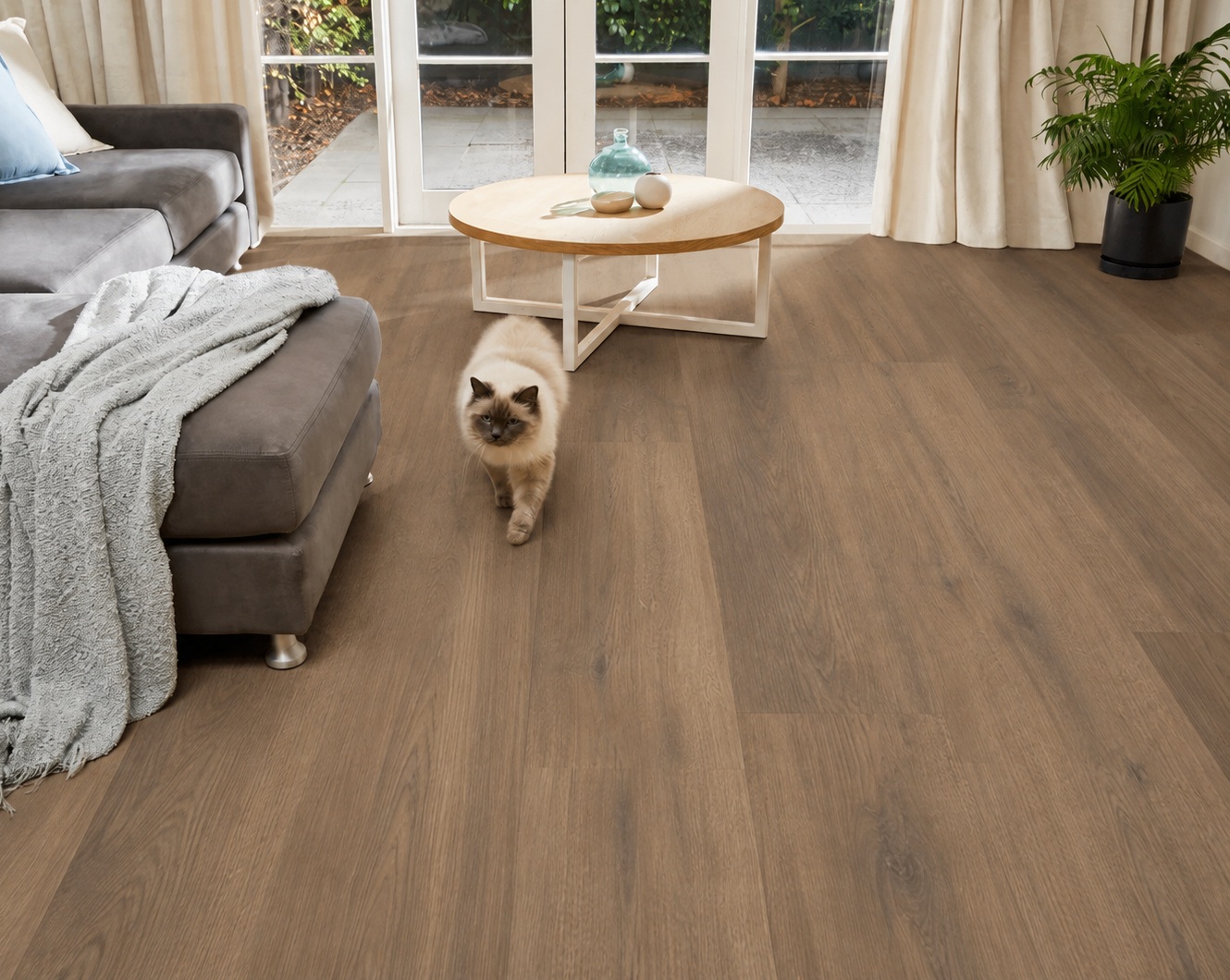
Table of Contents
Pet friendly flooring has to survive a different kind of daily wear than most household surfaces, from claws scrambling across a hallway to an accident that sits on the surface longer than anyone would like. Dogs and cats bring genuine joy into a home, but their claws, accidents, and constant movement put real demands on a floor that most flooring was never originally built to handle. The right material resists scratching, sheds moisture before it can seep into a seam or subfloor, and stays comfortable enough for a pet to walk, run, and rest on every day. This guide covers what actually makes a floor pet friendly, how different materials compare on scratch and moisture resistance, and how to choose the right option for the pets already living in your home.
What Makes a Floor Genuinely Pet Friendly
A floor earns the label “pet friendly” by performing well on three fronts at once: resisting scratches from claws and nails, shedding moisture from accidents or muddy paws before it causes damage, and providing enough traction that a pet is not slipping and sliding on a slick surface. Republic Flooring waterproof and pet-friendly benefits looks at one specific product line built around exactly this combination, and the same three-part standard applies across every material discussed in this guide.
A material that excels at one of these three factors but fails at another still creates real problems for a pet household. A floor that resists scratching but stays slippery underfoot can cause a dog to strain a joint chasing across it, and a floor that handles moisture well but scratches easily will show every claw mark within the first year of ownership.
Why Claws Are Harder on Floors Than Shoes
A dog or cat’s claws concentrate weight onto a small point of contact with every step, unlike the broader, flatter contact a shoe or bare foot makes, which is why even a well-behaved, calm pet can leave visible marks on a floor that shows no wear at all from normal human foot traffic. Nails that are not regularly trimmed make this effect noticeably worse, since longer nails dig deeper and drag more forcefully across a surface during normal walking and running.
Running and quick direction changes, common in play between dogs or when a cat chases a toy across a room, put a different kind of stress on a floor than steady walking does, since a sudden stop or turn drags claws sideways across the surface rather than pressing straight down. A floor’s finish and wear layer both play a role in how well it tolerates that sideways scraping motion, which is part of why a manufacturer’s stated scratch rating does not always tell the full story of how a floor performs during genuinely energetic play.
How the Main Flooring Materials Compare for Pets
| Material | Scratch Resistance | Moisture Resistance | Traction |
| SPC rigid core vinyl | High, with a quality wear layer | Fully waterproof core | Good with a textured finish |
| Engineered hardwood | Moderate; harder wood species help | Limited; not built for standing water | Good, especially with a matte finish |
| Tile | Very high; nearly scratch-proof | Excellent, fully water-resistant | Depends on finish; can be slick when wet |
| Carpet | Low; claws snag and pull fibers | Poor; absorbs accidents and odors | Excellent, very slip-resistant |
Rigid Core Vinyl and Why It Leads for Most Pet Households
SPC flooring pairs a fully waterproof rigid core with a wear layer that, at a sufficient mil rating, resists scratching well enough to handle daily claw traffic without showing marks after normal use. Because the core itself contains no wood fiber or organic material, an accident that sits on the surface for a while will not swell, warp, or stain the floor the way it can on wood-based materials, which makes cleanup far less stressful for the household.
Engineered Hardwood: A Warmer Option With Real Trade-Offs
Engineered hardwood flooring brings genuine warmth and a natural look that some pet owners specifically want, and choosing a harder wood species with a durable factory finish narrows the scratch-resistance gap with rigid core vinyl considerably. The trade-off is moisture tolerance: even a well-finished engineered floor is not built to handle standing liquid the way a fully waterproof core is, so households with a puppy still learning house manners, or an older pet with occasional accidents, should weigh that risk honestly before choosing wood.
Tile: The Toughest Surface, With a Traction Trade-Off
Tile resists scratching better than almost any other residential flooring material, since claws simply cannot mark a fired ceramic or porcelain surface the way they can a softer material, and it sheds moisture completely, making cleanup of any accident simple and quick. The trade-off is traction: a smooth, glazed tile can become genuinely slippery when wet, which matters for an older dog with joint issues or any pet prone to sliding into furniture at a run. Choosing a tile with a textured or matte finish, rather than a high-gloss surface, meaningfully improves grip without giving up any of tile’s scratch and moisture advantages.
Carpet and Why It Rarely Wins for Pet Households
Affordable carpets offer the softest, most slip-resistant surface of any flooring type, which some households value for an aging pet with limited mobility. However, carpet fibers snag under claws, trap odors from accidents deep in the padding beneath, and are the hardest of any material on this list to fully clean after a serious accident, which is why carpet consistently ranks lowest among pet owners choosing new flooring specifically for a pet-heavy household.
Cleaning and Maintenance Habits That Protect Any Floor
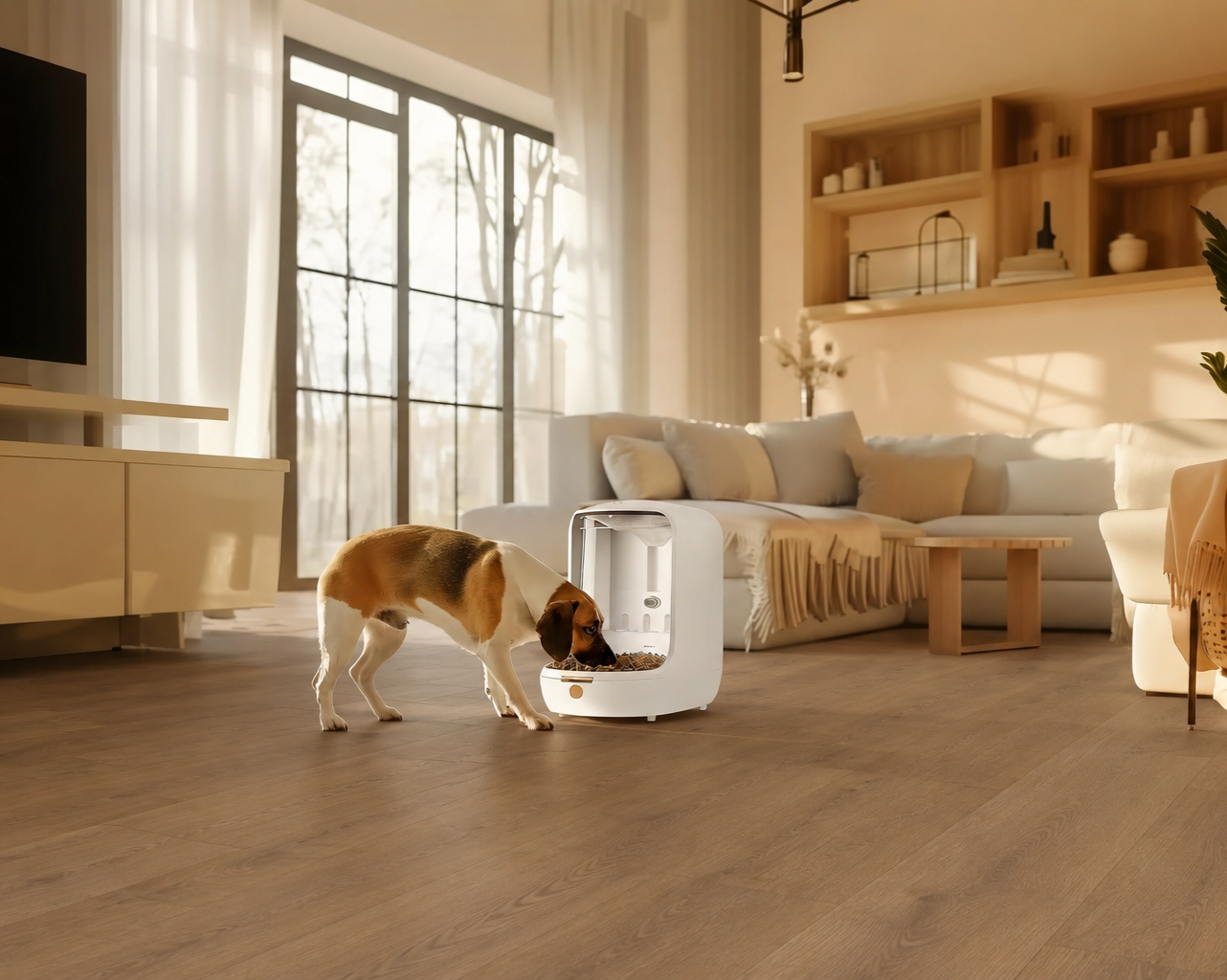
Regular nail trimming reduces scratching pressure on every material discussed above, and it is the single most effective habit a pet owner can adopt regardless of which flooring is already installed. Wiping up accidents immediately, rather than letting them sit, matters even on waterproof materials, since standing liquid can still seep into seams, grout lines, or transitions between rooms over time even when the surface material itself is unaffected.
Placing washable mats at entry points and food and water stations catches muddy paws and spill splashes before they reach the main floor, protecting even the most durable material from concentrated daily wear in those specific high-traffic spots. Trimming a pet’s nails on a regular schedule and keeping paws wiped after outdoor time both reduce the two biggest contributors to visible floor wear over time.
Odor Control Beyond the Surface
Odor from a pet accident is rarely just a surface-level problem, since liquid that reaches a seam, a grout line, or a porous subfloor material underneath can continue producing odor long after the visible mess is cleaned up. This is one of the strongest arguments for a fully sealed, waterproof material in high-traffic pet areas, since a floor with no way for liquid to reach the subfloor removes the odor problem at its source rather than requiring repeated deep cleaning to manage it after the fact.
Enzyme-based cleaners break down the organic compounds that cause lingering pet odors more effectively than general household cleaners, which mostly mask smell temporarily rather than eliminating its source. Using an enzyme cleaner promptly after an accident, on any material, gives a household the best chance of preventing a smell from settling in permanently.
Rugs and Runners as an Added Layer of Protection
Washable rugs and runners placed in high-traffic pet zones, such as in front of a favorite window perch or along a well-worn path between rooms, add a removable, washable buffer on top of a durable floor without sacrificing the floor’s own scratch and moisture resistance underneath. This approach lets a household enjoy the practical benefits of a hard-surface floor while still giving a pet a soft, familiar spot to rest, and any wear or staining happens to the washable rug rather than the floor itself.
Choosing the Right Floor for the Pets You Actually Have
A single calm senior cat puts far less demand on a floor than two large, active dogs sharing the same open living space, so the right material genuinely depends on the specific pets in the household, not a generic “best for pets” answer. Households with large dogs that run and play indoors benefit most from rigid core vinyl or tile, since both resist the concentrated scratching and occasional accidents that come with high energy levels. A single well-behaved cat or an older, calmer dog gives a household more flexibility to choose engineered hardwood for its warmth without the same level of risk.
Multi-pet households, or homes that foster or regularly host other people’s pets, benefit from erring toward the most durable, most waterproof option available, since more animals in rotation means more unpredictable wear and more accidents over the life of the floor.
Puppies and Kittens Change the Calculation
A young puppy or kitten still learning house manners represents the highest-risk period for any flooring material, since accidents are more frequent, chewing and scratching habits are not yet settled, and a young animal has less control over its own movements than an adult pet. Households bringing home a new puppy or kitten often do well to choose the most forgiving, fully waterproof material available for at least the first year, then reassess once the animal’s habits are established and more predictable.
Aging Pets Bring Their Own Considerations
An older dog or cat with joint stiffness or reduced mobility benefits most from a floor that offers real traction, even if that means accepting a slightly lower scratch-resistance rating in exchange, since a fall or a strained joint from slipping is a more immediate concern than a cosmetic scratch. A textured finish on tile or vinyl, or strategically placed rugs along an aging pet’s most-used paths through the home, can meaningfully reduce that slipping risk without requiring a full flooring change.
A Floor That Keeps Up With Your Pets
Choosing pet friendly flooring is less about finding one perfect material and more about matching real scratch, moisture, and traction needs to the pets actually living in the home. A floor chosen with those three factors in mind holds up far better over years of paws, claws, and the occasional accident than one chosen on looks alone. Visit Flooring Outlet & More to explore SPC flooring and other durable, pet-ready options suited to every kind of household.
Frequently Asked Questions
Q: What is the most pet friendly flooring material overall?
A: Rigid core SPC vinyl and tile both perform strongly across scratch resistance, moisture resistance, and cleanup, making them the two most reliable choices for most pet households. The better fit between the two often comes down to desired look and comfort underfoot.
Q: Is engineered hardwood a bad choice for homes with pets?
A: Not necessarily. A harder wood species with a durable finish can hold up reasonably well to calmer pets, but it is not the best choice for households with puppies, multiple large dogs, or pets prone to accidents.
Q: Why does carpet perform poorly for pet households?
A: Carpet fibers snag easily under claws and absorb moisture and odors from accidents deep into the padding, making it the hardest material on this list to fully clean and the most prone to visible pet-related wear.
Q: Does a scratch-resistant floor still need regular nail trims?
A: Yes. Even the most scratch-resistant materials perform best when nails are trimmed regularly, since long, untrimmed nails dig deeper and drag with more force regardless of how durable the wear layer or finish is.
Q: Can a slippery floor actually hurt a pet?
A: Yes. A slick surface can cause a pet to slide or strain a joint, especially with age or larger body size, which is why traction matters alongside scratch and moisture resistance when choosing pet friendly flooring.