Shop our best deals online.
Shop Now
What Happens When You Use a Steam Mop on Laminate Floors
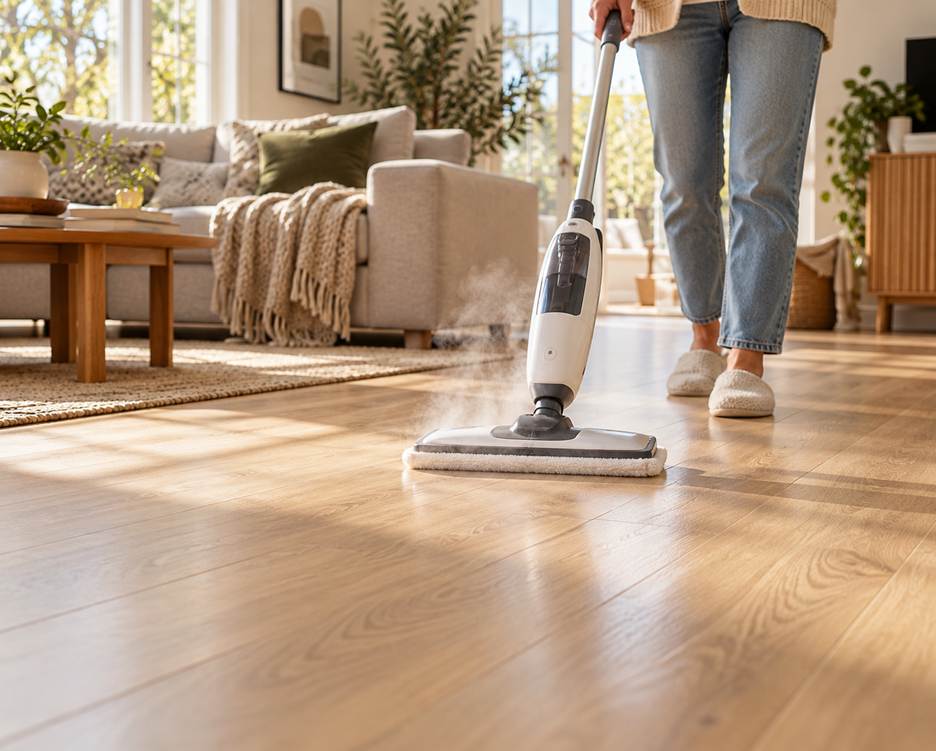
Table of Contents
- 1 What Laminate Is Made Of
- 2 What the Research Says About Fiberboard and Moisture
- 3 Can You Use a Steam Mop on Laminate Floors Safely?
- 4 What Moisture Does to Seams and Core
- 5 How to Spot Moisture Damage Early
- 6 Safer Ways to Clean Laminate Floors
- 7 When Steam Is Acceptable and When It Is Not
- 8 How to Read a Care Guide
- 9 What to Do If You Already Steamed Your Floor
- 10 Sanitizing Without Steam
- 11 Protecting the Floor From Below
- 12 Planning a Laminate Floor With Flooring Outlet & More
- 13 Sources
- 14 Frequently Asked Questions
Can you use a steam mop on laminate floors? It is a fair question, and in most cases the answer is no, unless the manufacturer’s care guide specifically allows it. Steam pushes heat and moisture toward the seams of a floor with a fiberboard core, and moisture swelling in that core can permanently damage the bonds that hold it together.
The damage may build gradually over repeated cleanings, so a floor can look fine for a while before the seams start to lift. This guide covers how laminate is built, what moisture does to the core and seams, how to spot early trouble, when steam is and is not acceptable, and which cleaning methods are safer.
What Laminate Is Made Of
Laminate flooring is layered. A clear wear layer resists scratches. A printed layer gives the plank its look. A core of high density fiberboard carries the structure. A backing layer balances the board. Our laminate flooring range comes in a variety of looks. All of them share this basic build.
Why the Core Matters
The core is the layer that matters here. Fiberboard is wood fiber pressed with resin. It acts differently from solid wood when it gets wet. The sections below explain how.
What the Research Says About Fiberboard and Moisture
The Wood Handbook chapter on composites groups hardboard and medium density fiberboard together as fiberboard. It describes moisture swelling that permanently damages the bonds between fiber and glue. It also says this lowers some strength properties. A swollen edge should not be expected to shrink back.
What a Wear Layer Does
The wear layer helps with spills wiped up fast. It does not make a board waterproof. The Handbook’s moisture chapter says coatings such as varnish and paint slow moisture changes in wood but do not stop them.
What the Fiberboard Study Found
One peer-reviewed study adds balance. Researchers tested medium density fiberboard in Polymers in 2020. They found that bond strength fell as moisture content rose. They also found the loss reversed when the panel dried. The test used normal humidity levels of 55 and 70 percent. That is very different from liquid water or hot vapor pushed into a seam.
Can You Use a Steam Mop on Laminate Floors Safely?
No USDA chapter tests steam. They describe how moisture affects fiberboard and wood in general. The steam rules come from each maker’s written care guide. Using a method the guide bans can void the warranty. A few lines allow light steam on a low setting. Only the guide for your exact product can say so. If you cannot find it in writing then treat steam as not allowed.
Why Steam Adds Risk
Steam adds heat to the moisture. It can push vapor toward the narrow gap between planks. A damp microfiber pad leaves a thin film that dries fast. A practical check is that the floor looks dry within a minute or two. Beads of water along the seams mean too much moisture. This is a rule of thumb and not a standard.
Waterproof and Water-Resistant Labels
A water-resistant or waterproof label does not change this. Each maker defines what its rating covers. Read the care guide for your product.
What Moisture Does to Seams and Core
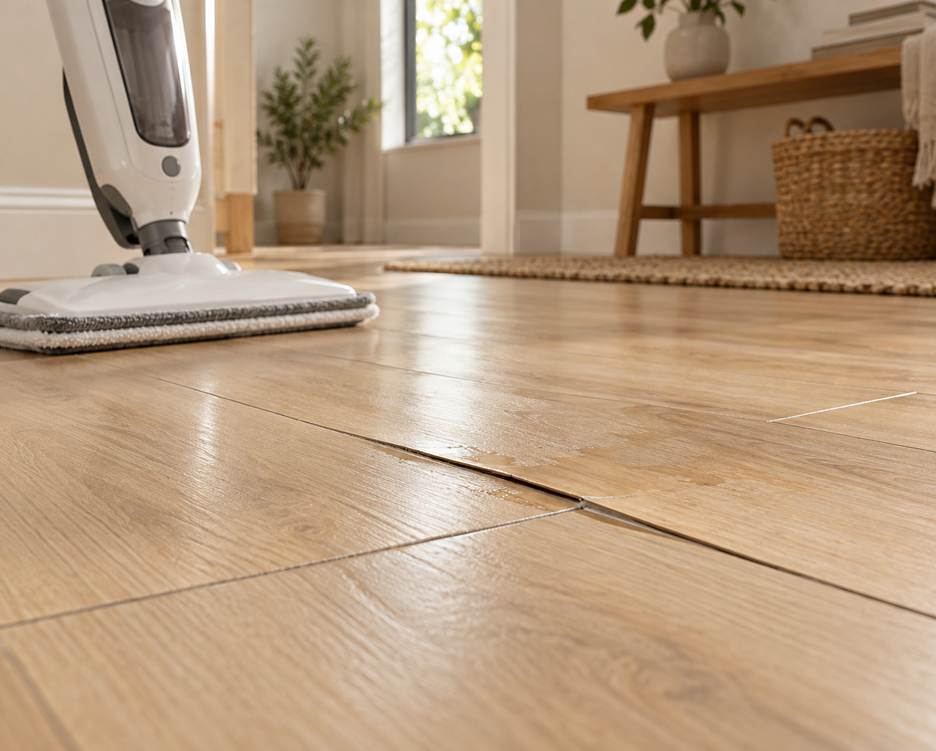
Repeated exposure to excess moisture can affect laminate flooring, particularly around plank joints where the fiberboard core may absorb water. This can cause edge swelling, raised seams, or changes in the plank’s shape. However, raised edges and peaking can also result from installation or expansion issues, so they do not always indicate moisture damage. The Flooring Outlet & More guide to laminate floor buckling explains additional causes of raised or distorted flooring.
Cupping and Other Changes
A weakened core can also cup. It may stop bridging small dips in the subfloor. Cloudy or sticky patches have several causes. Cleaner residue is one of them. They are not proof of steam damage on their own.
How to Spot Moisture Damage Early
Walk the floor in low morning light. Look along the seams. Watch for these signs:
- Raised edges: a plank edge sits higher than its neighbor.
- A faint ridge along a seam: raised joints may indicate moisture-related swelling or another flooring issue that requires inspection.
- Corners that do not lie flat: a sign the board has changed shape.
- New gaps: our guide on how to fix gaps in laminate flooring explains which gaps are seasonal and which point to moisture.
What to Do When You Find Damage
If you find damage then stop at once. Dry the seams with towels. Run a fan across the floor. Check again in a day or two. A plank that stays raised or soft may need replacement. That job is detailed because click joints release in order.
Safer Ways to Clean Laminate Floors
You can clean laminate floors well without steam. Remove grit and residue. Keep moisture off the seams.
Method |
Moisture Reaching the Seams |
Fit for Laminate |
Best Use |
| Dry dust mop or vacuum on the hard floor setting | None | Excellent | Daily or weekly grit removal |
| Microfiber mop wrung until barely damp | Very low | Good | Weekly cleaning |
| Spray mop with a laminate safe cleaner | Low | Good | Sticky spots and footprints |
| Steam mop | Heat plus moisture | Only if the care guide allows it | Not advised without written approval |
| Wet string mop and bucket | High | Poor | Not advised |
Choosing and Using a Mop
A good laminate floor mop is flat with a washable microfiber pad. Wring the pad until it feels nearly dry. Work along the planks. Finish with a dry pass if you see moisture. Sweep or vacuum first because grit scratches the wear layer. Use a cleaner made for laminate. Our guide on how to properly clean and maintain laminate flooring lays out the full routine.
Dried Spills
Dried spills need patience. Hold a cloth dampened with a laminate safe cleaner on the spot for a few seconds. This works without flooding the joint. The article on removing stains from laminate flooring lists options by stain type.
When Steam Is Acceptable and When It Is Not
Steam may be fine when the care guide for your exact product names it as allowed. The guide should give a setting or a time limit. The floor should be in good shape with tight seams. It is not suited to floors with swelling or open seams or chipped edges. It is also a poor idea on a floor of unknown origin. If you have no care guide then assume steam is not allowed. A laminate floor steamer will not give you a sanitizing claim the maker has not made. Ask the maker if that matters in your home. Do not rely on a steamer label to override the care guide.
How to Read a Care Guide
A care guide is a short document. It carries more weight than any cleaning product label. Look for four things. The first is the list of approved cleaning methods. The second is any line about steam. The third is a limit on how wet a mop may be. The fourth is the warranty wording. If the guide is silent on steam then ask the maker in writing. Keep a copy with your floor receipt. A written answer protects you if a claim comes up later.
What to Do If You Already Steamed Your Floor
If you have already used a steam mop on laminate flooring, stop using it until you confirm whether the manufacturer permits steam cleaning. One cleaning session does not necessarily mean the floor is damaged, but excess moisture can affect the joints and fiberboard core. Dry any visible moisture with a clean towel and allow the floor to dry under normal ventilation. Check for raised edges, swelling, or soft spots over the following days. If damage appears, contact the flooring manufacturer or installer for advice. Follow the approved cleaning methods listed in the product’s care guide.
Sanitizing Without Steam
Steam cleaning is not the only way to maintain a hygienic laminate floor. Regular cleaning with a manufacturer-approved laminate cleaner helps remove dirt and residue. However, cleaning does not necessarily sanitize or disinfect the surface. If sanitizing or disinfecting is required, confirm which products and methods are approved by the flooring manufacturer, and follow the disinfectant label instructions. Avoid excessive moisture that may enter the plank joints.
Protecting the Floor From Below
Moisture can also come from the subfloor. A barrier under the planks helps protect the seams from underneath. Wipe spills the moment they happen. Put mats at entries. Fit felt pads under furniture. Flooring Outlet & More carries laminate in a range of textures and colors and plank widths.
Planning a Laminate Floor With Flooring Outlet & More
Flooring Outlet & More is a San Jose flooring store at 1757 Junction Ave., Suite A. Not sure which cleaning method is safe for your laminate flooring? Contact Flooring Outlet & More to discuss product care instructions, cleaning requirements, and flooring options suited to your home.
Sources
USDA Forest Products Laboratory, Wood Handbook, Chapter 4: Moisture Relations and Physical Properties of Wood (2021). US government research. Supports the statement that coatings slow but do not stop moisture changes.
Magalhaes et al., Polymers, Effect of Panel Moisture Content on Internal Bond Strength and Thickness Swelling of Medium Density Fiberboard (2020). Peer-reviewed study. Supports the finding that bond strength fell with moisture and recovered on drying at normal humidity.
Frequently Asked Questions
Q: Can you use a steam mop on laminate floors if the box says waterproof?
A: Not automatically. Each maker defines what its rating covers. Check the written care guide for your product. If steam is not named as an approved method then skip it. A waterproof label is about spills and not repeated heat.
Q: Will one steam cleaning ruin a laminate floor?
A: Not necessarily. But it adds moisture to the seams for no gain. The research on composites describes swelling that builds up and does not reverse. If you steamed once then dry the floor well and switch to a damp mop.
Q: What is the best laminate floor mop?
A: A flat microfiber mop with a washable pad that you can wring nearly dry. It lets you control how much moisture touches the floor. Wash the pad after each use so it does not spread grit across the planks.
Q: How should I clean laminate floors day to day?
A: Sweep or vacuum on the hard floor setting. Then use a barely damp microfiber pad with a cleaner made for laminate. Wipe spills right away. Standing liquid is a bigger risk to the seams than foot traffic.
Q: What does moisture damage on laminate look like?
A: Early signs are a faint ridge along a seam and corners that do not lie flat. You may also see small new gaps. Later damage shows as raised edges or cupped planks. Stop the cause at the first sign and have the planks checked.