Shop our best deals online.
Shop Now
How Vinyl Plank Thickness and Wear Layer Affect Your Floor’s Durability

Table of Contents
Vinyl plank thickness is one of the specs shoppers see on nearly every product label, yet it is often confused with a completely separate number: the wear layer rating. Both matter, but they measure different things and protect a floor from different kinds of damage. Overall plank thickness affects underfoot comfort, sound, and how forgiving the floor is over an imperfect subfloor, while the wear layer is the clear top coating that actually determines how long the floor resists scuffs, scratches, and fading before it starts to look worn. This guide covers what each spec actually measures, how they work together, and how to read a product label with confidence before you buy.
What Vinyl Plank Thickness Actually Measures
Luxury vinyl plank flooring is sold in overall thicknesses that typically range from about 4 millimeters up to 8 millimeters or more, and that number describes the full plank, including the rigid or flexible core, the printed design layer, and the wear layer on top. A thicker plank generally feels more substantial underfoot, transmits less sound when walked on, and does a better job hiding small imperfections in the subfloor beneath it, since there is more rigid material to bridge minor dips and unevenness.
Thinner planks, often in the 4 to 5 millimeter range, are lightweight and install easily, but they telegraph subfloor imperfections more readily and can feel noticeably less solid underfoot, particularly on a concrete slab. Thicker planks in the 6 to 8 millimeter range are the better choice for rooms with uneven subfloors, high foot traffic, or where a quieter, more cushioned feel is a priority.
Core Construction and Overall Thickness
Rigid-core vinyl planks build most of their overall thickness from a dense core layer beneath the design and wear layers, and that core is what gives the plank its rigidity and dimensional stability. A thicker core generally means a more stable plank that resists expansion and contraction with temperature swings, which matters most in rooms with large windows or inconsistent climate control.
Two core types dominate the rigid-core category: stone-based cores, which are denser and more dimensionally stable, and wood-composite cores, which weigh less and can feel slightly warmer underfoot. Both contribute to overall plank thickness in similar ranges, so the choice between them usually comes down to feel and installation preference rather than a meaningful thickness difference.
What the Wear Layer Actually Protects Against
The wear layer is a clear, protective coating on top of the printed design layer, and it is measured separately from overall plank thickness in a unit called mils, where one mil equals one-thousandth of an inch. This layer is what takes the direct hit from foot traffic, furniture legs, pet claws, and dropped objects, and once it wears through, the printed design beneath it begins to show real damage rather than just surface scuffing.
Coating Technology Behind the Wear Layer
Most modern wear layers use a urethane-based coating, cured with ultraviolet light during manufacturing to create a hard, consistent surface across every plank. Some premium lines add aluminum oxide particles into that coating for extra abrasion resistance, which is one reason two products with the same mil rating can still perform slightly differently under heavy use. The coating technology matters most in rooms where grit and sand get tracked in regularly, since fine abrasive particles are what actually dull a wear layer’s surface finish over time, more so than typical foot traffic alone.
How the best underlayment for LVP turns a good floor into a great one covers the layer beneath the plank that supports comfort and sound control, which works alongside the wear layer on top to determine how the finished floor actually performs day to day.
| Wear Layer Rating | Typical Use | Traffic Suitability | Expected Lifespan |
| 6 to 8 mil | Light residential use | Low-traffic rooms only | Shorter; shows wear sooner |
| 12 mil | Standard residential flooring | Moderate household traffic | Solid multi-year performance |
| 20 mil | High-traffic residential | Pets, kids, busy households | Long-lasting under daily wear |
| 28 mil or more | Light commercial and heavy residential | Very high traffic, commercial-adjacent use | Longest before resurfacing is needed |
How Thickness and Wear Layer Work Together
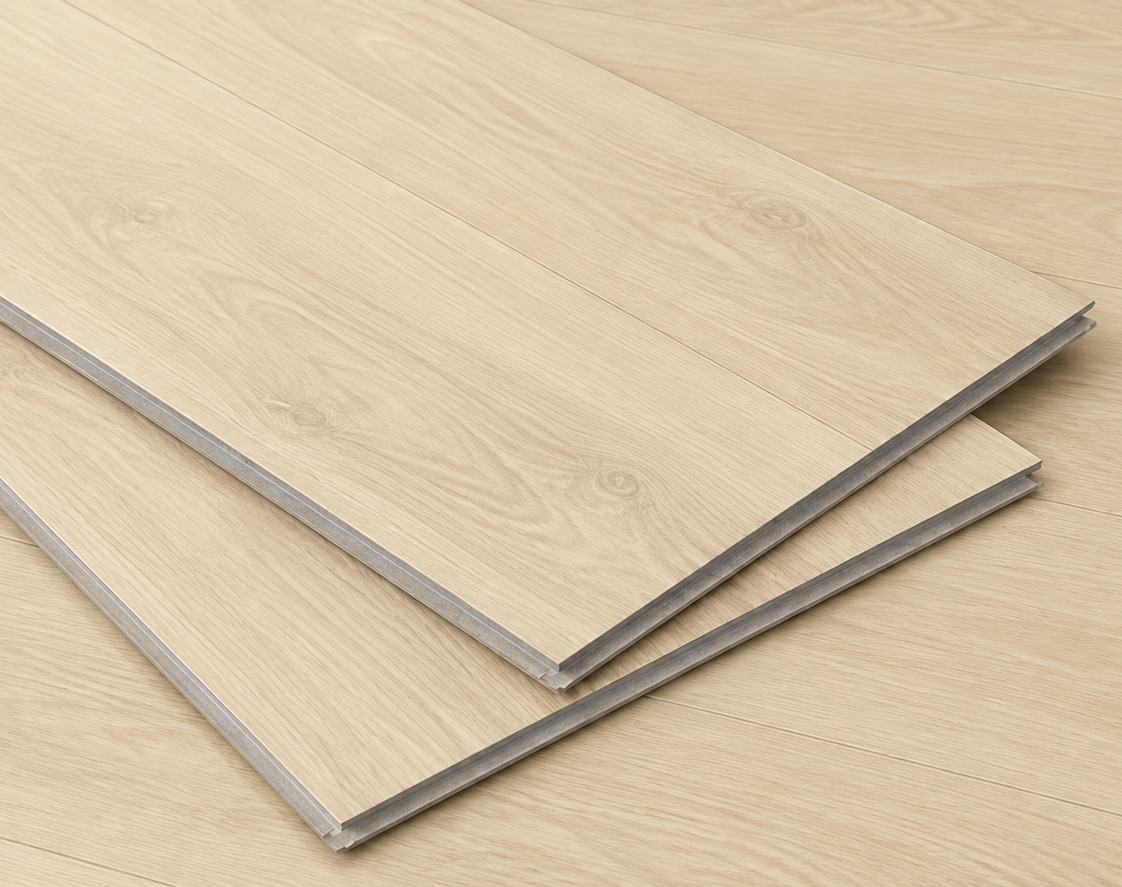
A thick overall plank with a thin wear layer can still wear out faster than expected in a busy household, since the wear layer, not the core thickness, is what stands between daily traffic and the design layer underneath. Conversely, a thinner plank with a generous wear layer can outlast a thicker plank with a minimal one in terms of surface durability, even though it may feel less substantial underfoot. Shoppers who focus on only one spec while ignoring the other often end up disappointed by a floor that either feels flimsy or scuffs faster than expected.
How to maintain your luxury vinyl plank flooring: tips for longevity covers the daily care habits that help any wear layer rating perform closer to its full potential, since even a well-rated wear layer can be shortened by harsh cleaning chemicals or dragging heavy furniture without protective pads.
Matching the Spec to the Room
A guest bedroom or a formal dining room used only occasionally can perform well with a 12 mil wear layer and a mid-range plank thickness, since the traffic load is naturally light. An entryway, kitchen, or a home with large dogs benefits from stepping up to 20 mil or higher, since that combination of foot traffic, claws, and dropped objects puts real daily stress on the surface. Why waterproof vinyl plank flooring is ideal for high-moisture areas covers the moisture side of that same room-matching decision, which often runs alongside the traffic consideration when choosing a spec.
A home office or a playroom that sees rolling chairs, toy bins dragged across the floor, and frequent furniture rearranging benefits from the same 20 mil-or-higher tier recommended for entryways, since rolling and dragging create concentrated wear points that a lighter wear layer was never built to handle. A rental property sits at the opposite end of the decision: an owner weighing frequent tenant turnover against long-term durability often finds that a mid-range 12 mil wear layer, paired with a thicker plank for comfort, strikes a reasonable balance between practicality and standing up to repeated move-ins and move-outs.
Why Two Floors With the Same Rating Can Still Feel Different
Two vinyl plank products can share an identical overall thickness and an identical wear layer rating and still feel different underfoot, since embossing depth, the texture pressed into the surface, and the underlying core density all affect how solid a floor feels when walked on. A deeper embossed texture can also mask light scuffing better than a smooth, glossy finish, even at the same mil rating, simply because surface marks are less visible against a textured pattern. Shoppers comparing two similarly specced products in a showroom should walk on both, not just read the label, since feel and visual wear-hiding are real differences the spec sheet alone will not capture.
Reading a Product Label With Confidence
Product labels and spec sheets list overall thickness and wear layer as two separate numbers, sometimes on the same line and sometimes in different sections of the listing, so it helps to know exactly what to look for before assuming a bigger number always means a better floor. Overall thickness is generally expressed in millimeters, while the wear layer is expressed in mils, and confusing the two can lead a shopper to believe a floor is more durable against scuffing than it actually is.
A floor described as “8mm with a 12 mil wear layer” is a substantial, comfortable plank with moderate surface durability suited to average household traffic, while a “5mm plank with a 20 mil wear layer” is thinner underfoot but holds up better against scratches and wear in a busier home. Neither combination is universally better; the right one depends on the specific room and household using it.
Some product listings also include an AC rating, borrowed from laminate flooring standards, alongside or instead of a mil number, which can add to the confusion when comparing vinyl products across different manufacturers. When a listing uses an AC rating instead of mils, treating it as a rough traffic-tier indicator, and confirming the actual mil equivalent with a sales associate before buying, avoids comparing two numbers that were never meant to be read side by side in the first place.
What to Keep in Mind Before You Decide
Warranty length is often a reliable shortcut when the mil rating alone feels hard to compare across brands, since manufacturers generally back a higher wear layer with a longer residential or light-commercial warranty. Waterproof luxury vinyl plank flooring for basement and moist areas is a useful companion read for anyone weighing thickness and wear layer alongside moisture resistance for a below-grade installation.
Matching the spec to the room, rather than defaulting to the highest available rating throughout a whole home, is generally the smarter approach, since a guest bedroom simply does not need the same wear layer built for a busy entryway. Reserving the higher-rated, more heavily built products for the rooms that see the most daily wear, and choosing a moderate spec for lighter-use spaces, gets the most practical value out of every plank installed.
- Overall thickness affects comfort, sound, and subfloor forgiveness, not surface scratch resistance
- Wear layer, measured in mils, is what actually resists scuffs, scratches, and fading
- Higher-traffic rooms and pet households generally do better with 20 mil or higher
- A longer manufacturer warranty is a useful proxy when comparing wear layer quality across brands
The Spec Sheet Tells the Real Story
Choosing vinyl plank flooring by look alone skips two of the most important numbers on the label, and both matter for different reasons: thickness for comfort and stability, wear layer for how long the surface actually holds up. Reading both specs together, rather than assuming a thicker plank automatically means a longer-lasting floor, is what separates a confident purchase from a guess. Visit Flooring Outlet & More to explore the full range of luxury vinyl plank flooring and installation materials in a range of thicknesses and wear layer ratings suited to every room in the home.
Frequently Asked Questions
Q: What vinyl plank thickness is best for most homes?
A: A plank between 6 and 8 millimeters suits most homes well, balancing comfort, sound control, and the ability to bridge minor subfloor imperfections. Thinner planks work fine in low-traffic rooms, while thicker planks are worth the upgrade in busy living areas.
Q: Is a higher mil wear layer always better?
A: A higher mil rating generally means better resistance to scuffs and scratches, but it is only worth choosing in rooms with real daily traffic, pets, or furniture movement. A low-traffic guest room does not need the same wear layer rating as an entryway.
Q: Can a thin plank with a high wear layer still be durable?
A: Yes. Wear layer thickness, not overall plank thickness, determines surface scratch and scuff resistance, so a thinner plank with a generous wear layer can outperform a thicker plank with a minimal one in day-to-day durability.
Q: Does a thicker wear layer make the floor waterproof?
A: No. Waterproof performance comes from the core material and seam design, not the wear layer, which only protects the surface from physical wear. A floor can have a high wear layer rating and still need a separate waterproof core for wet-area use.
Q: How do I compare wear layer ratings between brands?
A: Compare the mil number directly when it is listed, and use the manufacturer’s warranty length as a secondary check, since brands generally back a thicker wear layer with a longer residential or light-commercial warranty.