Shop our best deals online.
Shop Now
What Is the Best Flooring for a Mudroom Facing Rain and Muddy Paws
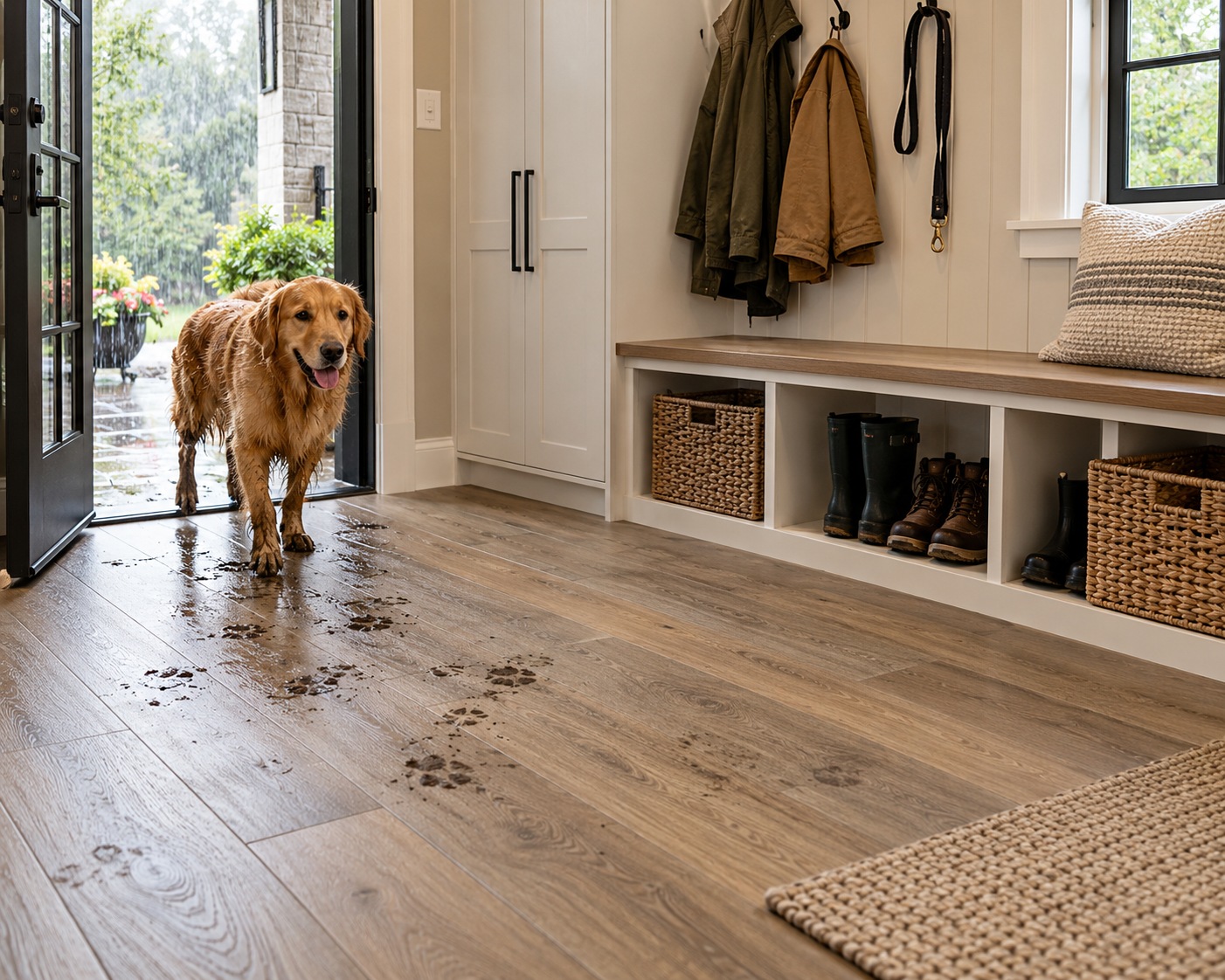
Table of Contents
Homeowners who ask what is the best flooring for a mudroom usually want one thing: a floor that stays intact when rain, mud and wet paws arrive at the door every day. For a typical home the answer is a plank floor made for wet conditions with a durable, scratch resistant surface, and luxury vinyl plank is a strong fit. Waterproof laminate can work where wet exposure is limited. Engineered hardwood is generally better suited to rooms with less frequent water exposure.
This guide covers what rain and mud do to a floor, how the main plank materials compare in a mudroom, what changes when pets use the same door, and the details at the walls and threshold that decide whether a waterproof floor actually protects the room.
What Is the Best Flooring for a Mudroom
A mudroom is the one room in a house where the floor takes the outdoors directly. Shoes bring in sand and grit, wet coats drip on the boards, and boots stand in puddles of melted snow or rain for hours. Other rooms see an occasional spill. A mudroom sees water every day it rains.
That difference changes what matters in a floor. Appearance still counts, but the first questions are whether the surface is waterproof, whether the planks resist scratching from grit, and whether the seams between planks can keep water from reaching the subfloor. Luxury vinyl plank flooring is a strong choice for wet, high-traffic mudrooms because many products have waterproof cores and durable wear layers. However, plank seams and perimeter gaps can still allow moisture to reach the subfloor, so proper installation and prompt cleanup remain essential.
Some laminate products are rated as water resistant or waterproof, but the protection varies by product, installation system, permitted exposure time and manufacturer instructions. Its limit is the edge of the plank. If water sits on a seam longer than the product allows, laminate can swell there. It suits a mudroom with a tidy boot tray better than one where wet gear is dropped straight on the floor.
What Rain and Mud Do to a Floor
Water is only half of the problem at an entry. Grit does the slow damage. Buildings magazine quotes a state health department warning that sand and grit can damage flooring and make it harder to clean. A floor that looks fine in a showroom can dull quickly when sand is ground into it by every pair of shoes that crosses the door. How a vinyl plank wear layer holds up against that grit is covered in the post on the best waterproof luxury vinyl plank flooring.
The same article notes a safety side to wet entries. A floor safety expert quoted there explains that once water gets under a mat or onto the floor, the mat can slide like a surfboard. A mudroom floor has to be chosen for a room where water is always present.
Moisture also travels sideways. Water that runs off boots finds the gap along the wall, the joint at the threshold, and the end seams between planks. From there it can reach the subfloor, where a waterproof plank on top does nothing to help. Many vinyl and laminate planks resist surface water, but a wet subfloor under them still holds moisture against the back of the floor, and the smell and swelling that follow show up long after the rain has stopped.
Grit, standing water at the door and water finding the edges are the three problems a mudroom floor has to handle. The floor choice covers the first two, and the installation covers the third.
How Waterproof Plank Floors Compare in a Mudroom
The table sets the main options side by side for a room that gets wet shoes every day.
| Floor Type | Water Behavior | Grit and Scuffs | Mudroom Fit |
| Luxury vinyl plank | Many products have waterproof cores, though seams and edges still need care | Wear layer protects the printed surface, and thickness is one factor among several | Strong choice for daily wet traffic when installed with care |
| Waterproof laminate | Water resistance varies by product, and seams need protection from standing water | Hard surface layer, with scratch resistance that varies by product | Good where wet gear stays on a tray or mat |
| Engineered hardwood | Wood layer reacts to repeated wetting | Scratch resistance depends on the finish and wear layer | Generally better suited to areas with less water exposure |
Why Luxury Vinyl Plank Leads
The reason is the construction. A vinyl plank is a layered product with a printed design under a clear wear layer, and many products have waterproof cores. The wear layer is measured in mil, where one mil is one thousandth of an inch. A thicker wear layer can provide additional protection, but actual scratch and wear resistance also depend on the coating, product construction, and maintenance. The vinyl plank thickness and wear layer guide explains how to read those numbers when comparing products.
Where Laminate Fits
Laminate has a hard surface layer and a wood look, and some products are rated for moisture. In a mudroom that stays dry between visits, it can be a sound choice when the rated exposure limits suit the room. The weak point is the plank edge. A puddle left under a bench for a long afternoon is a bigger test for laminate than for vinyl, so the room should have a place for boots that is not the bare floor. Care that keeps those edges in good shape is covered in the waterproof laminate flooring guide.
Where Engineered Hardwood Fits
Engineered hardwood has a real wood layer on top, and wood takes on moisture and gives it back as humidity and wetting change. A floor that is soaked every wet day gives that wood layer constant reasons to cup or gap. The material is a strong choice for living rooms and bedrooms. In a mudroom with regular wet traffic it asks for the most protection, and some products tolerate moisture better than others, so the manufacturer’s stated limits decide whether a given product suits the room.
How to Check a Sample Before Committing
Compare flooring samples in the mudroom under natural and artificial light. Review the manufacturer’s water exposure limits, wear resistance information and cleaning instructions. Check whether the finish and texture suit a room used by pets and people wearing wet shoes.
Daily Care That Keeps the Floor Intact
Three habits keep a mudroom floor in good shape.
- Sweep or vacuum before mopping, because wet grit scratches a surface the same way dry grit does.
- Use a damp mop and not a soaked one, and wipe puddles when they form instead of leaving them overnight.
- Lift boot trays and mats to clean beneath them, since water collects there and a floor that stays wet under a tray defeats the purpose of choosing a waterproof plank.
Muddy Paws, Claws and Wet Fur
Pets change the picture in two ways. Claws can scratch a surface, and a wet dog carries water on its coat that ends up on the floor when the dog shakes at the door. Pets that run in from a muddy yard also leave prints that need to be wiped before they dry into the texture of a plank.
A smooth or lightly textured plank is easier to wipe than a deeply embossed one. Deep texture looks good, but it holds mud in the grain of the plank, and a wet mop has to work harder to clear it. A lighter, mid tone color with some variation hides dried mud and dust better than a very dark or very pale solid color, which shows every print.
Scratches and accidents get fuller treatment in the guide to pet friendly flooring. For a mudroom, one habit does the most. A washable mat or tray at the door catches most of the water and grit before they reach the planks.
Details at the Walls, Door and Subfloor
Waterproof flooring materials can resist surface moisture, but the complete installation may still allow water through seams and perimeter gaps. The edges are installation details, and a mudroom is the room where those details are tested hardest.
Expansion Gaps and Baseboards
Plank floors need a small gap at the walls so the floor can move with temperature changes, and the baseboard or trim covers that gap. In a room that is regularly wet, that gap is the path water takes toward the wall framing. Tall, well fitted baseboards help because they protect the lower wall from splashes, and the trim should sit tight to the wall without being forced against the floor. Check the manufacturer’s installation instructions for the gap width that fits the product, because it varies by floor.
The Threshold at the Door
The place where the mudroom meets the exterior door is the wettest spot in the room. A threshold that slopes water away from the planks, with no gap under the door for rain to drive across the floor, takes a lot of load off the floor surface. Where the mudroom meets the hallway, a transition strip keeps wet footprints from tracking onto a different floor type and covers the change in height. Transition strips and other accessories are sold alongside the flooring.
Underlayment and Moisture Protection
On a concrete slab, moisture can come up from below even when the weather is dry. Underlayment and moisture control work together on a slab, as the post on installing LVP over concrete explains.
A Boot Zone That Keeps Water Off the Planks
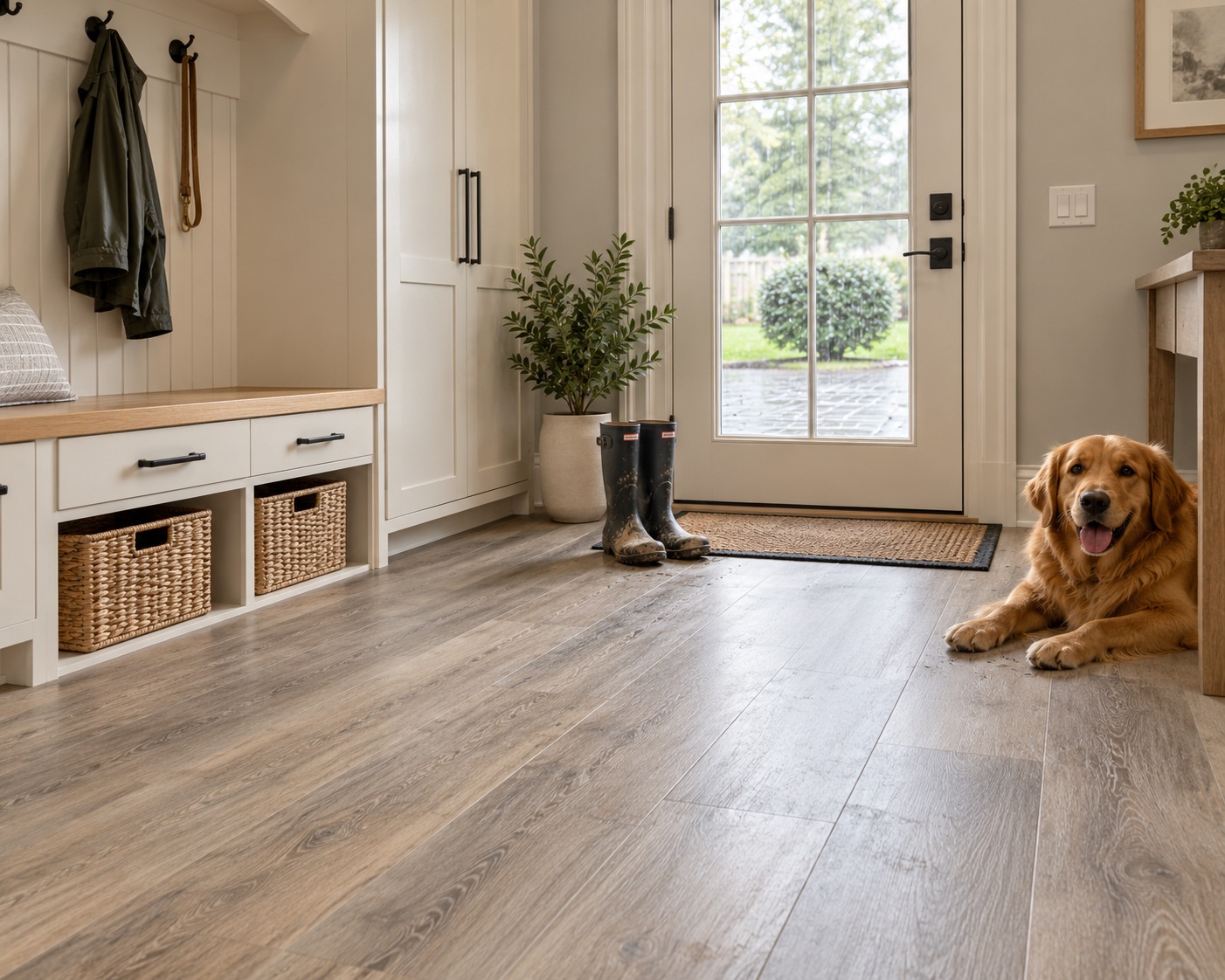
Even the best floor does better with a plan for wet gear. A bench with a tray beneath it gives boots a place to drain that is not the planks. Hooks mounted above the tray let a wet coat drip onto the tray or mat and not the floor. A washable runner along the main walking line catches the first few steps of grit and moisture. The floor itself stays the same, but it handles less water, and a floor that sees less standing water is likely to hold up better.
Mats Outside and Inside
Large rubber scraper mats placed outside an entrance remove snow and soil before people walk in, according to Buildings. That advice is aimed at commercial entrances, but the idea holds at a back door. The same article warns against vinyl backed mats that retain little water and offer poor slip resistance, and recommends mats that absorb water without saturating. A saturated mat should be moved out of use and dried, because a wet mat on a wet floor creates the slip it was supposed to prevent.
A Floor That Survives the Worst Day at the Door
The answer to what is the best flooring for a mudroom is the floor made for the worst day, not the average one. That means a plank made for wet conditions with a durable wear layer, a smooth surface that wipes clean, and an installation that keeps the edges dry. Luxury vinyl plank is a strong fit for that standard. Waterproof laminate can work where the entry stays tidy and the product’s rated exposure suits the room. Engineered hardwood is generally better suited to areas with less frequent water exposure, while mudrooms with regular wet traffic often benefit from flooring designed for moisture-prone spaces.
Visit Flooring Outlet & More to explore the full selection of luxury vinyl plank flooring and installation materials, along with the products that keep the edges of the floor protected. Contact us to talk through the right floor for your entry.
Sources
- Buildings is a trade magazine for building owners and managers, and its entryway flooring article covers grit damage, wet entry slip risk and mat selection.
Frequently Asked Questions
Q: What is the best flooring for a mudroom with heavy rain and muddy paws?
A: Luxury vinyl plank is a strong fit because many products have waterproof cores and durable wear layers, though seams and perimeter gaps still need proper installation. Waterproof laminate can work where boots and wet gear stay on a tray or mat and the product’s rating suits the room.
Q: Is entryway flooring different from mudroom flooring?
A: The needs overlap, but a mudroom usually sees more standing water and wet gear than a front entry. Entryway flooring has to handle grit and foot traffic, and mudroom flooring has to do that while also handling puddles, drips and pets.
Q: Does waterproof flooring protect the subfloor?
A: Only if the installation keeps water from reaching the edges. Many planks resist surface water, but water can still run through gaps at walls, thresholds and seams, so edge details and mats matter as much as the plank itself.
Q: Can hardwood be used in a mudroom?
A: Some products may be used where the manufacturer permits it, but wood reacts to moisture, so a floor that is wet on rainy days needs more protection than a vinyl or laminate plank. Engineered hardwood is generally better suited to areas with less frequent water exposure.
Q: How thick should the wear layer be on mudroom vinyl plank?
A: A thicker wear layer can provide additional protection, but actual scratch and wear resistance also depend on the coating, product construction, and maintenance. The wear layer is measured in mil, and the vinyl plank wear layer guide explains how to compare products.
About The Author