Shop our best deals online.
Shop Now
What Is the Best Carpet Padding for Long-Lasting Comfort and Support
Table of Contents
- 1 What Carpet Padding Actually Does
- 2 Understanding Carpet Pad Thickness
- 3 Understanding Carpet Pad Density
- 4 Common Carpet Padding Materials
- 5 Matching Carpet Padding to the Room and Traffic Level
- 6 Attached Pad: A Different Way to Handle Padding and Carpet Together
- 7 Carpet Padding Mistakes That Shorten a Floor’s Life
- 8 Padding Is Half of What Makes a Carpet Floor Work
- 9 Frequently Asked Questions
What is the best carpet padding for a room that needs to feel soft underfoot today and still hold up years from now? Most homeowners spend their attention comparing carpet fiber, color, and pile height, then treat the pad underneath as an afterthought that gets bundled in with installation. That approach overlooks how much the pad actually does. The layer sitting beneath a new carpet has more influence on comfort, sound, and long-term durability than almost any other single choice made during the project, and choosing the wrong one can shorten a carpet’s usable life by years even when the carpet fiber itself is a high-quality product. A pad that is too soft compresses under normal furniture and foot traffic within a few seasons, leaving carpet that once felt plush start to feel flat in high-use areas. A pad that is mismatched to a carpet’s requirements can also void the manufacturer’s warranty before a single stain or wear pattern ever shows up.
This guide covers what carpet padding actually does, how thickness and density each affect performance differently, the material options worth knowing, and how to match padding to the room it is going under.
What Carpet Padding Actually Does
Carpet padding does far more than add softness underfoot, even though comfort is the benefit most homeowners notice first. A good pad absorbs impact from foot traffic and furniture so the carpet backing itself does not take that stress directly, which is a major factor in how long carpet lasts before it starts to look worn. Padding also adds a layer of thermal insulation that keeps floors warmer in cooler months, and it dampens sound both within a room and between floors in a multi-level home, which matters most over bedrooms, home offices, and stairs.
Padding Protects the Subfloor and the Carpet Backing
Without padding, carpet backing sits in direct, repeated contact with a hard subfloor, and that friction wears down the backing far faster than it would with a cushioning layer in between. Padding also helps hide minor subfloor imperfections that would otherwise telegraph through thin, unpadded carpet, giving the finished floor a smoother, more consistent feel from room to room.
Understanding Carpet Pad Thickness
Carpet pad thickness is measured in fractions of an inch, and most residential pads fall somewhere between seven-sixteenths of an inch and half an inch. That range is not arbitrary. Most carpet manufacturers set a maximum thickness for their warranty to remain valid, since a pad that is too thick allows the carpet backing to flex more than it was engineered to handle, which can stretch and loosen the backing over time and lead to visible rippling or seam separation.
Why Thicker Padding Is Not Always Better
A thicker pad can feel noticeably softer in a showroom, but that extra give works against a carpet’s structure once furniture and daily traffic are added to the equation. Excess flex at the backing accelerates wear at high-contact points such as walkways and areas in front of furniture, so matching pad thickness to the carpet manufacturer’s stated maximum protects both comfort and warranty coverage rather than choosing purely by feel.
Understanding Carpet Pad Density
Carpet pad density is a separate measurement from thickness, expressed in pounds per cubic foot, and it has a bigger effect on long-term performance than thickness alone. Density describes how tightly the pad’s material is packed, not how tall the pad stands, so a thin, dense pad can outperform a thick, low-density pad in rooms that see real daily use. A general guideline is a minimum of six pounds density for bedrooms and other lighter-traffic rooms, and eight pounds or higher for living rooms, hallways, and any space furniture sits on for extended periods.
Low-Density Padding Breaks Down Faster Under Furniture
Low-density pad compresses permanently under the concentrated weight of couch and table legs far sooner than a denser pad does, leaving visible indentations that do not spring back even after the furniture is moved. That kind of compression is one of the most common reasons carpet starts to feel thin and worn in specific spots well before the carpet fiber itself shows comparable wear.
Common Carpet Padding Materials
Padding materials differ in how they are made and how each one performs across thickness, density, and moisture exposure, and picking the right one depends on the room as much as the carpet going on top of it.
Padding Material Comparison
| Material | Typical Density | Moisture Resistance | Best Suited For |
| Rebond (bonded urethane) | Wide range, 5 to 10+ lb | Low unless treated | Most residential rooms |
| Prime (virgin) foam | Moderate, consistent cell structure | Low | Bedrooms, low-traffic rooms |
| Memory or frothed foam | Moderate, soft initial feel | Low | Bedrooms, formal sitting rooms |
| Fiber pad | High, firm and thin | Moderate | Stairs, warranty-sensitive installs |
| Rubber (flat or waffle) | High | Excellent | Basements, below-grade rooms |
Rebond Pad Is the Most Common Residential Choice
Rebond padding is made from recycled foam offcuts bonded together under heat and pressure, and it is the pad installed under most residential carpet today because it covers a wide density range in one material category. Choosing rebond at the density appropriate for the room, rather than assuming any rebond pad performs the same, is what actually determines how well it holds up.
Rubber Pad for Basements and Moisture-Prone Rooms
Rubber padding resists moisture far better than foam-based options, which makes it the more reliable choice below grade or in any room where humidity or occasional dampness is a realistic concern. Pairing a rubber pad with a proper moisture barrier from a client’s own installation materials selection gives carpet in a basement the same kind of protection that waterproof hard flooring gets from a dedicated underlayment.
Choosing Carpet Pad Material for Your Situation
When homeowners ask what is the best carpet padding for a specific room, carpet pad material is often the deciding factor once thickness and density have already been narrowed down to a reasonable range. A dry, furnished living room and a below-grade rec room can call for the same density on paper and still need a completely different carpet pad material, since moisture exposure and how the room is used matter as much as the numbers on a spec sheet. Working through material options in this order, ruling out anything that cannot handle the room’s moisture level first, then choosing between the remaining options based on feel and traffic, keeps the decision manageable instead of overwhelming.
Matching Carpet Padding to the Room and Traffic Level
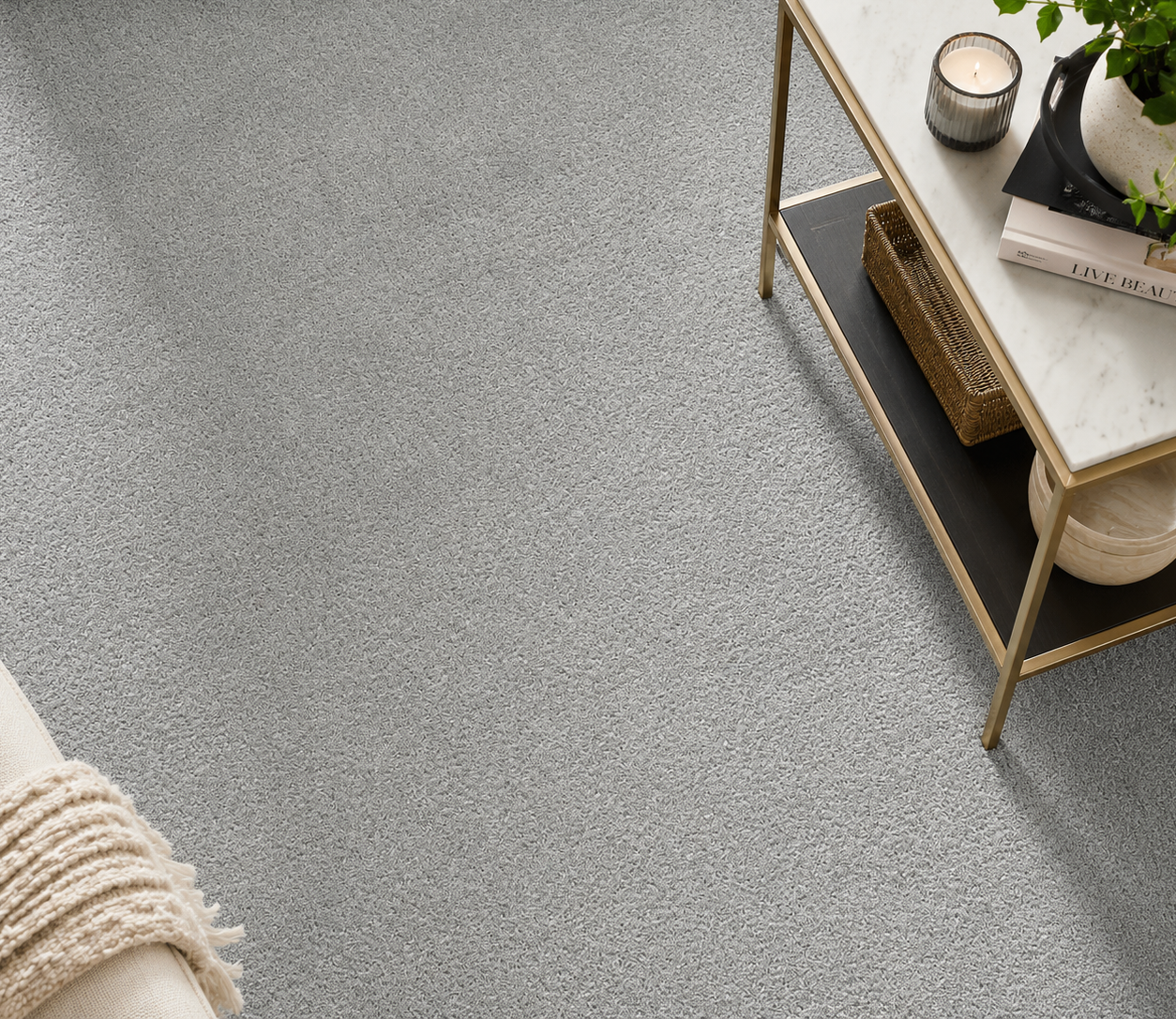
The right pad depends on how a room is actually used, not just which carpet was chosen for it. Bedrooms and other lower-traffic rooms can prioritize a softer, more cushioned pad since furniture stays largely in place and foot traffic is lighter. Living rooms, hallways, and family rooms benefit more from a denser pad that resists compression under regular use, even if it feels slightly firmer underfoot than a plush bedroom pad would.
Carpet Padding for Stairs Needs Special Attention
Stairs see concentrated, repeated pressure at the nose of each step, and a pad that is too thick or too soft here creates an unstable feel that can be a genuine safety concern rather than just a comfort issue. A thin, dense, firm pad rated specifically for stairs keeps carpet secure against the stringer and tread on every step, which matters more on stairs than in almost any other part of a home.
Attached Pad: A Different Way to Handle Padding and Carpet Together
Some flooring products now come with padding already bonded to the material at the factory, removing the step of installing a separate pad before the carpet or plank goes down. This kind of built-in cushioning delivers a consistent, factory-controlled density across the entire floor instead of depending on how evenly a separate pad was installed by hand. Flooring Outlet & More carries several attached pad flooring options for homeowners who want that consistency without adding a separate padding step to the project.
Carpet Padding Mistakes That Shorten a Floor’s Life
A few recurring mistakes account for most premature carpet wear that traces back to the pad rather than the carpet itself. Choosing a density too low for the room’s traffic level leads to permanent compression under furniture within a few years. Exceeding a carpet manufacturer’s maximum recommended thickness stresses the backing and can void the warranty outright. Skipping a moisture barrier below grade allows dampness to reach the pad from underneath, which can lead to mildew long before the carpet on top shows any visible sign of a problem. Reusing old, compressed pad under a brand-new carpet is another common shortcut that undercuts the new carpet’s performance from day one, since a pad that has already lost its structure cannot support new fiber the way a fresh one can.
Professional Installation Helps Avoid These Mistakes
Matching pad thickness and density correctly, cutting rubber pad tight against a moisture barrier, and securing stair pad properly all benefit from experienced hands. Homeowners working with flooring installation services get padding specified and installed to the carpet manufacturer’s actual requirements rather than guessed at after the fact.
Replacing an Old Floor With Carpet Changes the Padding Plan
A room that previously had hard flooring often needs subfloor prep before new carpet padding goes down, since screws, adhesive residue, or an uneven surface left behind can telegraph through both the pad and the carpet above it. Homeowners moving from an existing hard floor to carpet, rather than replacing carpet with carpet, can review how to lay carpet over an existing floor for the subfloor and transition details specific to that kind of project, since the padding decisions above assume a clean, properly prepared subfloor to begin with.
Padding Is Half of What Makes a Carpet Floor Work
What is the best carpet padding ultimately comes down to matching thickness and density to the specific room and the carpet manufacturer’s requirements, not picking the softest option on the shelf. A pad chosen this way protects the investment in the carpet above it, keeps the floor feeling consistent for years rather than months, and avoids warranty problems that have nothing to do with the carpet fiber itself. Explore carpet accessories at Flooring Outlet & More to find the right padding for your next flooring project.
Frequently Asked Questions
Q: What is the best carpet padding for a typical living room?
A: A rebond pad with a density of at least eight pounds per cubic foot generally holds up best in living rooms, since it resists compression under furniture and daily foot traffic better than a softer, lower-density option.
Q: How thick should carpet padding be?
A: Most residential carpet pads fall between seven-sixteenths of an inch and half an inch, and the exact maximum should match the carpet manufacturer’s warranty requirements rather than personal preference alone.
Q: What is the difference between carpet pad density and thickness?
A: Thickness measures how tall the pad stands, while density measures how tightly its material is packed per cubic foot; a thin, dense pad often outperforms a thick, low-density one in durability.
Q: Can carpet padding be too thick?
A: Yes, padding that exceeds a carpet manufacturer’s maximum recommended thickness lets the backing flex more than it was designed for, which can stretch seams and void the warranty over time.
Q: Does carpet padding need a moisture barrier in a basement?
A: Yes, pairing a rubber pad with a proper moisture barrier is the safest approach below grade, since it keeps dampness from reaching the pad and carpet from underneath the subfloor.